

MOTS-c: key takeaways
MOTS-c is a 16-amino-acid mitochondrial peptide with cell and mouse data on metabolism and exercise, no published human dosing study, and it is prohibited at all times in sport (WADA S4.4.1). Last reviewed: September 2026.
- First described in 2015, MOTS-c is encoded in a small open reading frame of the mitochondrial 12S rRNA gene (Lee 2015).
- In mice, doses of 0.5 to 15 mg/kg per day reduced diet-induced weight gain and insulin resistance and improved running performance (Lee 2015, Reynolds 2021).
- Human data cover the body's own MOTS-c: muscle levels rose 11.9-fold after cycling in 10 young men (Reynolds 2021).
- Reported use in forums and guides clusters around 5 to 15 mg per week, split into three injections or small daily doses.
- The first phase 2a trial, MOTS-MET (NCT07505745), started in February 2026 and has published no results.
- On the WADA 2026 and 2027 lists, MOTS-c is named under S4.4.1 (AMPK activators) and is banned at all times.
Jump directly to the dosage chart, reconstitution or side effects.
What is MOTS-c?
MOTS-c is a 16-amino-acid peptide encoded in a short open reading frame of the mitochondrial 12S rRNA gene and first described in 2015.
Its sequence is MRWQEMGYIFYPRKLR, the molecular formula C101H152N28O22S2 at 2,174.6 g/mol, and the CAS registry number 1627580-64-6. The structure is recorded in the PubChem entry for MOTS-c. Chemically it belongs to the mitochondrial-derived peptides, a class of peptides encoded by mitochondrial DNA.
Changhan Lee and Pinchas Cohen at the University of Southern California described MOTS-c in 2015; the intellectual property sits with UCLA and was licensed to CohBar, which developed the modified analog CB4211. Products sold as MOTS-c may be the free base, the acetate or the trifluoroacetate salt. There is no USAN or INN name, so the salt form can differ between suppliers.
How MOTS-c works
In cell and animal models, MOTS-c inhibits the folate cycle and de novo purine synthesis, which activates AMPK, while its exact molecular target remains unknown.
The 2015 study by Lee and colleagues identified skeletal muscle as a target tissue. In cells engineered to overproduce MOTS-c, endogenous AICAR accumulated to more than 20 times control levels, a cell-culture finding (HEK293 cells) without a matching animal or human result. Under glucose deprivation, MOTS-c moved into the cell nucleus in an AMPK-dependent way and regulated nuclear genes, including antioxidant response elements, with NRF2 involved (Kim 2018).
The FDA briefing document of May 2026 states that the molecular target of MOTS-c remains unknown, which makes organ-level effects hard to predict. A 2024 study reports that MOTS-c binds and activates the kinase CK2 in skeletal muscle: in mice there was less muscle atrophy and more glucose uptake in muscle, while the K14Q variant bound CK2 more weakly (Kumagai 2024). A 2026 eLife paper describes MOTS-c as an amphipathic host defense peptide with direct antibacterial activity that neutralized MRSA in a mouse peritonitis model (Rice 2026).
MOTS-c benefits and effects at a glance
Documented benefits come from cell and animal models and from observational blood levels, not from injecting MOTS-c in humans.
| Effect | Evidence level | Key study and result |
|---|---|---|
| Body weight and insulin resistance | Mouse | Lee 2015: about 20 percent less body weight after 8 weeks on a high-fat diet; clamp glucose infusion rate about +30 percent |
| Exercise performance and aging | Mouse | Reynolds 2021: running performance improved in young, middle-aged and old mice; lifespan only a trend (median +6.4 percent, P = 0.23) |
| Endogenous exercise response | Human, observational | Muscle MOTS-c rose 11.9-fold after cycling in 10 young men (Reynolds 2021); a second study found only a trend in plasma after 45 minutes of endurance exercise (von Walden 2021) |
| Diabetes and obesity blood levels | Human, observational | Lower in type 2 diabetes (meta-analysis SMD -0.89, Zhou 2024); in obesity higher (meta-analysis SMD +0.51, Zhou 2024; 273 vs 223 pg/ml, Yoon 2026), no difference (Ozkaya 2025), lower in children with obesity (Luo 2023) |
| Antimicrobial and immune signaling | Cell and mouse | Rice 2026 (eLife): direct antibacterial activity, MRSA neutralized in a mouse peritonitis model |
| Human administration data | None published | No published human dosing study; phase 2a MOTS-MET (NCT07505745) started February 2026, no results yet |
MOTS-c research and evidence
No published human study has tested MOTS-c administration: the evidence consists of cell and mouse studies, observational data on the body's own MOTS-c, phase 1 data on the analog CB4211 and one phase 2a trial still recruiting.
Animal studies: weight, metabolism and exercise
In mice, MOTS-c prevented diet-induced obesity and insulin resistance and improved running performance at doses of 0.5 to 15 mg/kg per day.
In the 2015 study by Lee and colleagues, male CD-1 mice on a high-fat diet received 0.5 mg/kg per day intraperitoneally for 8 weeks and weighed about 20 percent less than controls; in clamp experiments, 5 mg/kg per day for 7 days raised the glucose infusion rate by about 30 percent. The same paper reports that MOTS-c prevented age-related and diet-induced insulin resistance as well as diet-induced obesity.
Reynolds 2021 tested 5 and 15 mg/kg per day and found that only the higher dose improved running performance in young mice on a high-fat diet after 10 days; in middle-aged and old mice, 15 mg/kg per day for 2 weeks improved physical performance across age groups. Late-life dosing (15 mg/kg three times per week) showed only a trend toward longer life (median +6.4 percent, maximum +7.0 percent, P = 0.23).
In a separate study, the mtDNA variant m.1382A>C (K14Q) did not reproduce these effects in male mice on a high-fat diet, and female mice showed no effect at all (Zempo 2021). Male carriers of that variant also had type 2 diabetes more often in the cohorts analyzed.
Human data and the CB4211 analog
Human findings describe the body's own MOTS-c during exercise and in metabolic disease, and phase 1 tolerability of the analog CB4211, not effects of injected MOTS-c.
In 10 untrained young men who cycled on an ergometer, muscle MOTS-c rose 11.9-fold after exercise, blood levels rose 1.6-fold during and 1.5-fold after exercise, and both returned to baseline after 4 hours of rest (Reynolds 2021). In a randomized study (n = 30, 10 of them in the endurance group), plasma MOTS-c showed only a trend toward a rise after 45 minutes of endurance exercise (von Walden 2021).
Blood levels follow metabolic disease in observational studies. A meta-analysis of 7 studies (602 participants) found lower levels in type 2 diabetes (SMD -0.89) and higher levels in obesity (SMD +0.51) (Zhou 2024); a Qatari cross-sectional study also found lower levels in type 2 diabetes (Ramanjaneya 2019); one cross-sectional study reports 273 vs 223 pg/ml in adults with obesity and no change 6 months after bariatric surgery (Yoon 2026), another found no difference between obesity and normal weight (Ozkaya 2025), and children with obesity had lower levels (Luo 2023). Absolute values are not comparable between methods: one ELISA reported 45.9 to 218.5 ng/ml, which a validated mass spectrometry method could not confirm (Knoop 2019).
Only one human program in this class has reported results so far, and it tested an analog. In phase 1a, CB4211 was given as single and multiple ascending doses over one week to 65 healthy adults and was generally tolerated, with injection-site reactions the only event above 10 percent. In phase 1b, 20 adults with obesity and fatty liver received 25 mg once daily subcutaneously for 4 weeks (11 active, 9 placebo); ALT fell 21 percent vs 4 percent, AST 28 percent vs 11 percent and glucose 6 percent vs 0 percent, while liver fat (MRI-PDFF, -5.03 vs -4.88 percent) and body weight showed no clear advantage (CohBar topline release, August 10, 2021; NCT03998514). The release is a company statement, not a peer-reviewed paper.
For MOTS-c itself, the phase 2a study MOTS-MET (NCT07505745) plans 120 adults with prediabetes and overweight or obesity at one center (Shenzhen), a fixed dose once daily subcutaneously for 12 weeks (the amount is not published), with the Matsuda index as the primary endpoint. It started in February 2026, was listed as recruiting (registry last verified March 2026), and expects primary completion in February 2027.
MOTS-c dosage
There is no approved or study-validated human dose of MOTS-c: mice received 0.5 to 15 mg/kg per day, the analog CB4211 was given at 25 mg once daily, and reported use clusters around 5 to 15 mg per week.
Reported-use figures come from forum threads, a commercial clinic guide and supplier guide pages; they are not recommendations from a health authority. The chart comes first, then the doses from mouse and analog studies.
MOTS-c dosage chart: reported use
Reported use clusters around 5 to 15 mg per week, split either into three injections or into small daily doses, with a low start of 0.2 to 1 mg in forum reports.
| Pattern | Dose per injection | Frequency | Weekly total | Units on a U-100 syringe (10 mg/ml) | Reported by |
|---|---|---|---|---|---|
| Low start | 0.2 to 1 mg | first injections, or daily | 1.4 to 7 mg if taken daily | 2 to 10 units hold 0.2 to 1 mg | forum reports, one vendor protocol post |
| Three times per week | 3.3 to 5 mg (range 1 to 5 mg) | Monday, Wednesday, Friday | 10 to 15 mg | 33 to 50 units hold 3.3 to 5 mg | forum reports |
| Daily low dose | 0.2 to 2 mg | every day | 1.4 to 14 mg | 2 to 20 units hold 0.2 to 2 mg | forum reports |
| Higher reported patterns | 5 mg on 4 to 5 days; one clinic guide up to 10 mg | 3 to 5 times per week | 20 to 50 mg | 50 to 100 units hold 5 to 10 mg | forum report, commercial clinic guide |
| Weekly split | 3.3 mg | 3 injections per week, then 4 weeks off (one report) | 10 mg | 33 units hold 3.3 mg | forum report |
| Supplier calculator range | 5 to 10 mg (conservative start 5 mg) | once or twice per week | 5 to 20 mg | 50 to 100 units hold 5 to 10 mg | BergdorfBio calculator page |
| Guide page weekly range | about 1.7 to 10 mg (5 to 10 mg per week, split) | 1 to 3 days per week | 5 to 10 mg | 17 to 100 units hold 1.7 to 10 mg | Path To Peptides guide page |
Unit figures assume a 10 mg vial dissolved in 1 ml bacteriostatic water (10 mg/ml); the conversion is covered in the reconstitution section. For the math on any other vial size, use the peptide calculator.
Where those patterns come from:
- Peptide Critic forum, thread 1388 (10 users with dose data, posts from May 7 to June 18, 2026): 1 to 5 mg three times per week (most often 3.3 to 5 mg) or 0.2 to 2 mg daily; one user ran 5 mg on 4 to 5 days per week.
- Thread 1175 (April 21 and 22, 2026): 10 mg per week in 3 injections, 2.5 mg daily, 1.33 to 2 mg daily, or 1.5 to 2 mg every 3.5 days.
- Thread 349 (protocol post, author listed as a verified vendor): 200 mcg daily, increased by 200 mcg every 2 weeks up to 1 mg daily.
- Threads 2154 and 2273 (July 2026): 1 mg Monday to Friday over 12 weeks, 500 mcg, or about 1.5 mg daily.
- Healthspan clinic guide (June 29, 2026): start at 2.5 to 5 mg, then 5 to 10 mg per injection, 3 to 5 times per week.
- BergdorfBio calculator page: conservative start at 5 mg once weekly, standard 5 to 10 mg once or twice weekly.
- Path To Peptides: 5 to 10 mg per week on 1 to 3 days.
No clinical dose of MOTS-c exists. The range of 2.5 to 10 mg that some online guides call a clinical dose comes from clinic and forum practice, not from studies.
Dosage in studies (animal and analog)
Published dosing exists only for mice (0.5 to 15 mg/kg per day) and for the analog CB4211 (25 mg once daily in phase 1b).
| Study or source | Population | Dose | Route and duration | Result or note |
|---|---|---|---|---|
| Lee 2015 | Male CD-1 mice on a high-fat diet | 0.5 mg/kg per day | i.p., 8 weeks | About 20 percent less body weight vs control |
| Lee 2015 (clamp) | Male CD-1 mice | 5 mg/kg per day | i.p., 7 days | Glucose infusion rate about +30 percent |
| Reynolds 2021 | Young CD-1 mice on a high-fat diet (10 days) | 5 or 15 mg/kg per day | i.p. | Only 15 mg/kg improved running performance |
| Reynolds 2021 | Middle-aged (12 months) and old (22 months) mice | 15 mg/kg per day | i.p., 2 weeks before treadmill | Physical performance improved in all age groups |
| Reynolds 2021 (late life) | Mice from about 23.5 months | 15 mg/kg, 3 times per week | i.p., until end of life | Lifespan only a trend, not significant |
| CB4211 phase 1a (analog) | 65 healthy adults | single and multiple ascending doses | s.c., one week | Injection-site reactions the only event above 10 percent |
| CB4211 phase 1b (analog) | 20 adults with obesity and fatty liver (11 active) | 25 mg once daily | s.c., 4 weeks | ALT -21 vs -4 percent, AST -28 vs -11 percent, glucose -6 vs 0 percent; liver fat no advantage vs placebo |
| MOTS-MET phase 2a (NCT07505745) | 120 adults with prediabetes and overweight or obesity | fixed dose once daily, amount not published | s.c., 12 weeks | No results published yet |
Scaled by body surface area (FDA 2005 guidance), the mouse doses of 0.5, 5 and 15 mg/kg per day correspond to about 0.04, 0.41 and 1.22 mg/kg. This conversion does not establish an effective or safe human dose, and it ignores the injection route (i.p. in mice).
MOTS-c cycle and protocol
Reported cycles run 8 to 12 weeks followed by a 4 to 6 week break.
The two main patterns are a three-times-weekly schedule with weekly totals of 10 to 15 mg, and small daily doses that rise slowly. Forum reports often start at 0.2 to 1 mg to screen for allergic reactions, while the Healthspan clinic guide starts at 2.5 to 5 mg. Cycle length and the break figure mainly in guide pages (Healthspan: 8 to 12 weeks, then 4 to 6 weeks off; the BergdorfBio calculator: 8 to 12 weeks, then 4 weeks off; the vendor protocol post in thread 349: 8 to 12 weeks).
How to reconstitute MOTS-c
Add 1 ml of bacteriostatic water slowly down the side of a 10 mg vial, swirl until clear without shaking, and you get 10 mg/ml, so 10 units on a U-100 syringe hold 1 mg.
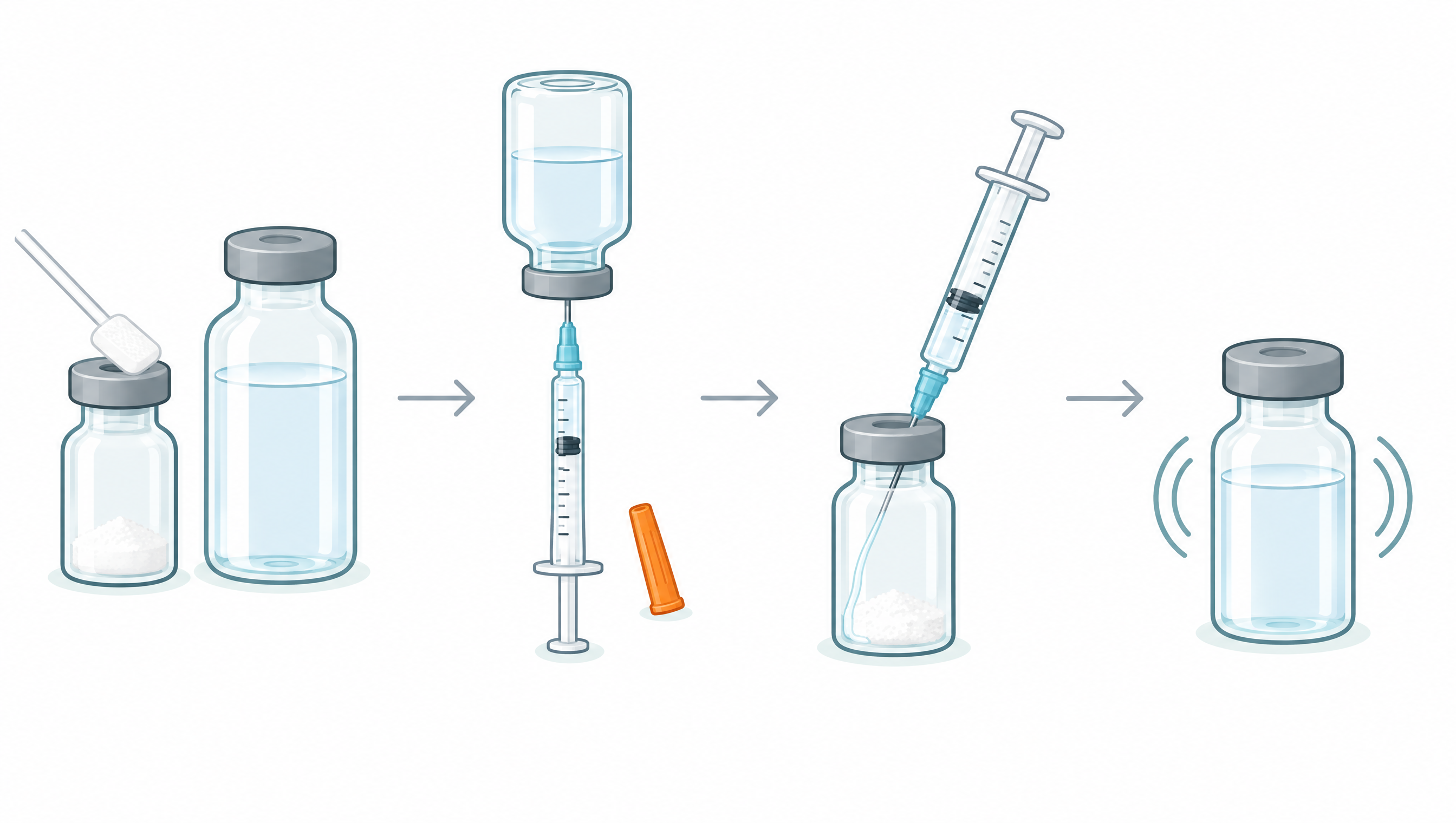
Reconstitution is one calculation chain: concentration (mg/ml) equals vial content (mg) divided by solvent (ml), volume (ml) equals dose (mg) divided by concentration, and units on a U-100 syringe equal volume (ml) times 100. Materials: a 10 mg MOTS-c 10 mg research vial, bacteriostatic water for injection (USP) and a U-100 insulin syringe.
How to mix MOTS-c
- Work out the concentration: 10 mg in 1 ml gives 10 mg/ml. For other vial sizes use the peptide calculator.
- Draw 1 ml bacteriostatic water and let it run slowly down the vial wall. Do not spray it onto the powder.
- Swirl gently until the powder dissolves. Do not shake.
- Check the solution for clarity, particles and discoloration before use.
- Convert the dose: at 10 mg/ml, 5 mg is 0.5 ml (50 units), 2.5 mg is 0.25 ml (25 units) and 1 mg is 0.1 ml (10 units) on a U-100 syringe.
- Keep the mixed vial at 2 to 8 °C and date it. BergdorfBio states 14 to 28 days after dissolving (supplier data).
- Date the opened bacteriostatic water bottle and discard it after 28 days (label).
Store the unopened lyophilized vial frozen at minus 20 °C, dry and protected from light; short-term storage at 2 to 8 °C is possible. Besides the 10 mg vial, you may come across 5 mg vials (named in the FDA nomination) and 20 mg vials (Path To Peptides); for those sizes, enter the vial content in the peptide calculator.
BergdorfBio's product page suggests 2 ml of bacteriostatic water (5 mg/ml). With 2 ml, a 5 mg dose would be 1.0 ml (100 units) and fill a whole 1 ml syringe, which is why this guide uses 1 ml.
Reconstitution quick reference (U-100 units)
All rows assume a 10 mg vial dissolved in 1 ml bacteriostatic water (10 mg/ml) and show each dose on a U-100 and a U-40 syringe.
| Dose | Volume | Units on a U-100 syringe | Units on a U-40 syringe |
|---|---|---|---|
| 5 mg | 0.5 ml | 50 units hold 5 mg | 20 units hold 5 mg |
| 2.5 mg | 0.25 ml | 25 units hold 2.5 mg | 10 units hold 2.5 mg |
| 1 mg | 0.1 ml | 10 units hold 1 mg | 4 units hold 1 mg |
On a U-40 syringe the same unit count delivers 2.5 times the volume; check the U-100 print on the syringe, not the cap color (Barrera 2019). Peptide solutions are labeled in mg/ml, and the syringe marks are a volume scale.
How to inject MOTS-c
Use a short insulin syringe, always lift a skin fold, inject at 90 degrees and rotate sites.
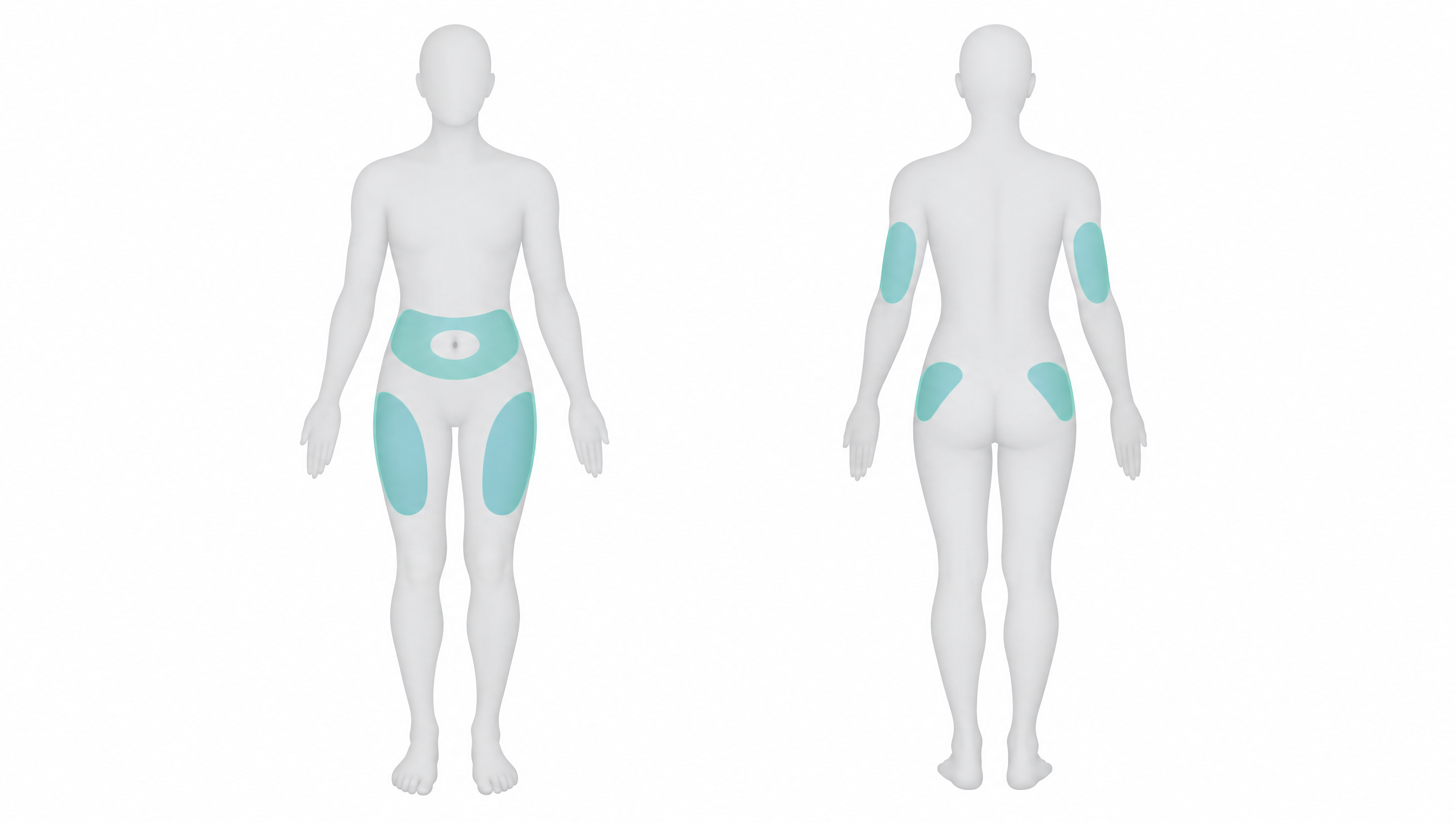
These steps follow the FITTER 2016 and FIT UK 2019 injection recommendations, which were written for insulin and are applied here to subcutaneous research peptides.
- Draw the dose into a U-100 insulin syringe. At 10 mg/ml, 1 mg is 10 units and 5 mg is 50 units.
- Use the shortest available insulin syringe needle (the shortest syringe needles are 6 mm). Always lift a skin fold with a syringe, and with any needle longer than 4 mm.
- If your BMI is under 19, the FIT UK recommendations advise against syringe needles altogether.
- Inject at 90 degrees to the surface of the skin fold.
- Keep the needle in the skin for at least 5 seconds after pressing the plunger (counting to 10 is better), then withdraw it at the same angle and release the fold.
- Rotate sites: abdomen (about 2 cm from the navel), front and outer thigh, buttocks, and the back of the upper arm if someone else injects. Move each injection at least 1 cm from the previous one, and avoid scars, bruises and lipohypertrophy.
- Use a new syringe and needle for every injection. If there is bleeding, press the site with gauze, do not rub.
- Dispose of needles and syringes immediately in a puncture-proof container and follow local rules.
For general equipment, see injection supplies and injection accessories.
MOTS-c side effects
Human side-effect rates for MOTS-c are unknown; documented reports include histamine-like reactions and, for the analog CB4211, transient, mild to moderate injection-site reactions.
Without a human dosing study, there are no dose-related frequencies for MOTS-c itself. What is documented comes from the analog program, from authority notes and from user reports collected by USADA and in one forum, and from one commercial clinic guide.
| Event | Dose or condition | Frequency per source |
|---|---|---|
| Reactions at the injection site | CB4211, phase 1a dose escalation and phase 1b 25 mg daily s.c. | Only adverse event above 10 percent; transient, mild to moderate |
| Serious adverse events | CB4211 phase 1a and 1b | None reported in the topline release |
| Faster heart rate or palpitations | MOTS-c from online purchases, user reports (USADA) | No frequency reported |
| Site irritation, insomnia, immune reactions, fever | Same user reports (USADA) | No frequency reported |
| Histamine or allergic reactions, site reactions | Forum reports 2026, various doses including 200 mcg | About 5 users in one forum; site reactions at 200 mcg described as "pretty bad" |
| Fatigue, feeling of warmth, mild nausea | Start of titration (vendor protocol post) | No frequency reported |
| Redness, swelling, irritation at the site | Healthspan clinic guide | No frequency reported |
| Low blood sugar | Together with glucose-lowering medicines (Healthspan) | Risk note, no frequency |
| Anaphylactic reaction | Forum warnings against starting at 10 mg; one anecdotal report of mild anaphylaxis | No confirmed case |
| Blood pressure change | 1 mg Monday to Friday while taking blood pressure medication | No change reported by 2 users |
| Immunogenicity | Injectable MOTS-c, possible through aggregation and peptide-related impurities | FDA note; compounded products can carry a substantial immunogenicity risk |
| FAERS reports | MOTS-c through March 9, 2025 | None; compounding pharmacies rarely report |
Forum users start low because of the reported histamine-like and injection-site reactions. If you take glucose-lowering medicines, a clinic guide flags low blood sugar as a risk to watch. Seek medical advice for pronounced or persistent reactions, and get emergency help right away for signs of a severe allergic reaction such as trouble breathing, swelling of the face or throat, or fainting.
MOTS-c vs CB4211, AICAR and growth-hormone peptides
MOTS-c is a mitochondrial-derived peptide that activates AMPK through the folate cycle; CB4211 is its modified analog, AICAR and BAM15 are other AMPK activators in the same WADA subsection, and growth-hormone peptides such as tesamorelin, sermorelin, CJC-1295 and ipamorelin act on a different hormone axis.
Comparing these compounds matters because suppliers and forums group them loosely as "mitochondrial" or "metabolic" peptides. Mechanisms, evidence and prohibited-list entries differ.
| Compound | What it is | Evidence status | WADA class |
|---|---|---|---|
| MOTS-c | 16-amino-acid mitochondrial peptide (MDP) | Cell and mouse data; no published human dosing study | S4.4.1 (AMPK activators), banned at all times |
| CB4211 | Modified analog of MOTS-c, developed by CohBar | Only human dosing data in this class: phase 1a and 1b (see human data); not developed further after CohBar's liquidation | n/a |
| AICAR | AMPK activator that accumulates when MOTS-c is overexpressed in cells | Cell data; the compound itself is not MOTS-c | Named in S4.4.1 next to MOTS-c |
| BAM15 | Listed by WADA as an example of an AMPK activator | Named only as a class example | S4.4.1 next to MOTS-c |
| Tesamorelin, sermorelin, CJC-1295, ipamorelin | Growth-hormone axis compounds (GHRH analogs or secretagogues) | No shared mechanism with MOTS-c | S2.2.4 for sermorelin, CJC-1295 and ipamorelin |
| K14Q variant and salt forms | mtDNA variant m.1382A>C; free base, acetate, trifluoroacetate | Variant did not reproduce the weight and glucose effects in male mice on a high-fat diet (Zempo 2021); salts sold under the same name | n/a |
Growth-hormone axis compounds such as tesamorelin share no documented mechanism with MOTS-c (see our tesamorelin dosing guide). Other mitochondrial-derived peptides such as SHLP2 have been measured alongside MOTS-c; in one study both were positively associated with liver fat in people without diabetes (Sequeira 2021). If you see MOTS-c sold alongside AICAR or BAM15, note that WADA names all three under the same subsection and that the compounds are not interchangeable.
Frequently asked questions
What is MOTS-c in simple terms?
MOTS-c is a mitochondrial peptide of 16 amino acids that circulates in the blood and rises in blood during exercise and in muscle after it. It was first described in 2015 by Lee and Cohen as a peptide encoded in the mitochondrial 12S rRNA gene. Most of what is known about it comes from cell and mouse studies.
What is the MOTS-c dosage?
Mouse studies used 0.5 to 15 mg/kg per day, and the analog CB4211 was tested at 25 mg once daily in phase 1b. In forums and guides, reported use is mostly 5 to 15 mg per week, split into three injections of 3.3 to 5 mg or into small daily doses. At 10 mg/ml, 3.3 to 5 mg equals 33 to 50 units on a U-100 syringe.
How do you reconstitute a 10 mg MOTS-c vial?
Let 1 ml of bacteriostatic water run down the vial wall and swirl without shaking. The concentration is 10 mg/ml: 5 mg equals 0.5 ml or 50 units, 2.5 mg equals 25 units, 1 mg equals 10 units on a U-100 syringe. The supplier's product page suggests 2 ml instead (5 mg/ml), which would make 5 mg fill a 1 ml syringe; this guide uses 1 ml.
How much MOTS-c do people inject per day?
Forum reports describe 0.2 to 2 mg per day, often with a low start of 0.2 to 1 mg to screen for allergic reactions. Other users do not inject daily but split a weekly total of 10 to 15 mg into three injections. One vendor protocol post starts at 200 mcg daily and steps up to 1 mg over several weeks.
What is a typical MOTS-c protocol or cycle?
Two patterns dominate: three injections per week (10 to 15 mg weekly) or small daily doses that rise slowly. Forum reports start as low as 0.2 to 1 mg, while the Healthspan clinic guide starts at 2.5 to 5 mg. Guides describe 8 to 12 weeks of use, then a 4 to 6 week break before the next cycle.
What benefits does MOTS-c show in research?
In mice, MOTS-c supported insulin sensitivity, body-weight control and running performance in the studies by Lee 2015 and Reynolds 2021. Human data describe the body's own MOTS-c: levels rise in muscle and blood after exercise and are often lower in type 2 diabetes. One modified analog, CB4211, completed a phase 1 program; MOTS-c itself has no published administration study.
What side effects are reported for MOTS-c?
Forum reports describe histamine-like and allergic reactions, which is why many users start at 0.2 to 1 mg. In the phase 1 program with the analog CB4211, the only event above 10 percent was transient, mild to moderate injection-site reactions. The FDA notes possible immunogenicity from aggregates and peptide-related impurities in compounded products.
What do MOTS-c before and after results show?
No published before-and-after study has tested MOTS-c in people. The often cited figure, about 20 percent less body weight after 8 weeks, comes from male mice on a high-fat diet in the 2015 Lee study. User photos and reports in forums are anecdote and cannot show what the peptide does in humans.
What do Reddit and forum users report about MOTS-c?
The reports reviewed for this guide come from the Peptide Critic forum (about 17 users in 5 threads), not from a systematic look at Reddit. They describe histamine-like reactions, injection-site reactions and dosing from 0.2 mg daily up to 5 mg on 4 to 5 days per week. One protocol post comes from a verified vendor.
How long does MOTS-c stay in the body?
No pharmacokinetic study of MOTS-c in people or animals has been published, so the half-life of an injected dose is unknown. In human whole blood in the lab, MOTS-c is quickly broken down into shorter fragments. That lab result does not show how long an injected dose stays active in the body.
Sources
- Lee C et al.: The mitochondrial-derived peptide MOTS-c promotes metabolic homeostasis and reduces obesity and insulin resistance. Cell Metabolism 2015. PMID 25738459.
- FDA CDER: Briefing Document, PCAC Meeting July 23 to 24, 2026, MOTS-c bulk drug substances (evaluation dated May 11, 2026).
- PubChem: MOTS-c (CID 146675088).
- Reynolds JC et al.: MOTS-c is an exercise-induced mitochondrial-encoded regulator of age-dependent physical decline and muscle homeostasis. Nature Communications 2021. PMID 33473109.
- Kim KH et al.: The mitochondrial-encoded peptide MOTS-c translocates to the nucleus to regulate nuclear gene expression in response to metabolic stress. Cell Metabolism 2018. PMID 29983246.
- Rice MC et al.: MOTS-c is a mitochondrial-encoded interferon-linked host defense peptide. eLife 2026. PMID 42611943.
- Kumagai et al.: MOTS-c modulates skeletal muscle function by directly binding and activating CK2. iScience 2024. PMID 39559755.
- Zempo H et al.: A pro-diabetogenic mtDNA polymorphism in the mitochondrial-derived peptide, MOTS-c. Aging 2021. PMID 33468709.
- von Walden F et al.: Acute endurance exercise stimulates circulating levels of mitochondrial-derived peptides in humans. Journal of Applied Physiology 2021. PMID 34351816.
- Ramanjaneya M et al.: Mitochondrial-derived peptides are down regulated in diabetes subjects. Frontiers in Endocrinology 2019. PMID 31214116.
- Zhou Q et al.: The correlation between mitochondrial derived peptide and metabolic states: a systematic review and meta-analysis. Diabetology & Metabolic Syndrome 2024. PMID 39160573.
- Yoon SH et al.: Systemic MOTS-c levels are increased in adults with obesity in association with metabolic dysregulation and remain unchanged after weight loss. Journal of Clinical and Translational Endocrinology 2026. PMID 41551324.
- Ozkaya DY et al.: MOTS-C levels in individuals with and without obesity and its association with inflammation, insulin resistance and endothelial dysfunction. Archives of Endocrinology and Metabolism 2025. PMID 41004666.
- Luo YH et al.: Serum MOTS-C levels are decreased in obese children and associated with vascular endothelial function. Diabetes, Metabolic Syndrome and Obesity 2023. PMID 37077579.
- Sequeira IR et al.: Plasma mitochondrial derived peptides MOTS-c and SHLP2 positively associate with android and liver fat in people without diabetes. Biochimica et Biophysica Acta 2021. PMID 34419510.
- Knoop A, Thomas A, Thevis M: Development of a mass spectrometry based detection method for the mitochondrion-derived peptide MOTS-c in plasma samples for doping control purposes. Rapid Communications in Mass Spectrometry 2019. PMID 30394592.
- Hudson Biotech: ClinicalTrials.gov NCT07505745 (MOTS-MET), phase 2a in prediabetes and overweight or obesity, 2026.
- CohBar: Positive topline results from the phase 1a/1b study of CB4211 (August 10, 2021); ClinicalTrials.gov NCT03998514.
- CohBar, SEC EDGAR: Form 8-K (filed November 13, 2023), liquidation after failed merger with Morphogenesis.
- USADA: What is the MOTS-c peptide? 2026.
- Mendias CL, Awan TM: Safety and efficacy of approved and unapproved peptide therapies for musculoskeletal injuries and athletic performance. Sports Medicine 2026. PMID 41966639.
- World Anti-Doping Agency: Prohibited List 2026; Prohibited List 2027 (tracked changes, August 26, 2026); 2027 explanatory notes (August 17, 2026).
- FDA: Certain bulk drug substances for use in compounding that may present significant safety risks (content current April 22, 2026).
- FDA list, copy hosted by the Alliance for Pharmacy Compounding: Bulk drug substances nominated for use in compounding under section 503A (updated September 29, 2023).
- Orrick: FDA announces removal of 12 peptides from category 2 and schedules PCAC meetings (April 2026).
- FDA: Bulk drug substances nominated for use in compounding under section 503A (updated May 14, 2026).
- McDermott Will & Schulte: Bulk-list bound? PCAC backs majority of peptides in two-day public meeting (July 2026).
- NCPA: FDA advisory committee nominates six peptides for pharmacies to compound (July 31, 2026).
- USADA: Explanation of key changes on the 2024 WADA Prohibited List.
- FDA CDER: Guidance for industry, estimating the maximum safe starting dose in initial clinical trials (2005), Table 1.
- Bergdorf Bioscience: MOTS-c 10 mg product page and FAQ; MOTS-c calculator. Research use only.
- Healthspan: MOTS-C dosage chart and protocol guide (June 29, 2026).
- Path To Peptides: MOTS-C protocol guide 2026.
- Peptide Critic Community: MOTS-C cycle/protocol thread 1388 (May 7 to June 18, 2026); thread 1175 (April 21 and 22, 2026); thread 349; thread 2154; thread 2273.
- Frid AH et al.: New insulin delivery recommendations (FITTER 2016). Mayo Clinic Proceedings 2016. PMID 27594187.
- Forum for Injection Technique (FIT) UK: The UK injection and infusion technique recommendations, 5th edition 2019.
- Hospira/Pfizer: Bacteriostatic water for injection, USP (label, DailyMed).
- Barrera F, Murvelashvili N: Poorly controlled type 3c diabetes due to use of veterinarian insulin syringes (U-100 and U-40 scales). Case Reports in Endocrinology 2019. PMID 31316841.
- Eli Lilly: Zepbound KwikPen instructions for use (2026).
- FDA: Best way to get rid of used needles and other sharps.

Commenta
Nota che i commenti devono essere approvati prima di essere pubblicati.
Questo sito è protetto da hCaptcha e applica le Norme sulla privacy e i Termini di servizio di hCaptcha.