
Introduction - Why Mpox Testing Matters in 2026
As we move through 2026, mpox (formerly known as monkeypox) remains a public health concern across Europe, though the situation has evolved significantly since the virus emerged as a global threat in 2022. Early detection through testing is crucial for preventing transmission and accessing appropriate medical care quickly. Germany has documented 4,640 mpox cases since the outbreak began, with the landscape shifting as new viral variants emerge and spread patterns change.
The emergence of Clade Ib, a more transmissible variant first detected in Berlin in December 2025, has heightened awareness among health authorities and the public alike. Since then, local sexual transmission has been confirmed, marking a new epidemiological pattern. As of January 2026, Germany has recorded 16 Clade Ib cases, demonstrating that the virus continues to adapt and spread in new ways. Currently in 2026, 35 cases have been confirmed, showing an ongoing but manageable situation.
Understanding your testing options, when to get tested, and how to interpret results can help you protect yourself and others. This comprehensive guide covers everything you need to know about mpox testing in 2026.
What Is Mpox (Monkeypox)?
Mpox is an infectious disease caused by the monkeypox virus, a member of the Poxviridae family. The virus can spread through direct contact with infectious lesions, body fluids, or respiratory droplets, as well as through contaminated materials like bedding or clothing. Although the virus was first identified in primates, humans can contract and transmit the infection.
Understanding Viral Clades
The mpox virus exists in different clades, or genetic variants, each with slightly different characteristics. The two main clades circulating globally are:
- Clade IIb: This variant was dominant in the 2022 - 2024 outbreak period. It typically causes milder disease with lower transmission rates and has been the most common form diagnosed in Germany until recently.
- Clade Ib: The newer Clade Ib, detected first in Germany in December 2025, appears to have enhanced transmissibility and may spread more efficiently through close contact. This variant has sparked increased surveillance efforts across Europe.
Both clades can cause similar clinical presentations, but understanding which variant is circulating helps public health officials track transmission patterns and provide appropriate guidance.
Mpox Symptoms - When to Consider Testing
Mpox typically follows a predictable course of illness. The incubation period - the time between exposure and symptom onset - ranges from 5 to 21 days, with studies showing an average of approximately 8.5 days. This window is important to remember if you've had potential exposure.
Early Signs and Symptoms
The disease usually begins with systemic symptoms that resemble other viral infections:
- Fever (often 38 degrees Celsius or higher)
- Muscle and joint pain (myalgia and arthralgia)
- Headache and fatigue
- Swollen lymph nodes (lymphadenopathy) - sometimes the first sign
Characteristic Skin Lesions
Within 1 - 3 days of fever onset, a distinctive rash typically develops. The progression follows these stages:
- Macules: Flat, red spots on the skin
- Papules: Raised bumps that emerge from the red spots
- Vesicles: Fluid-filled blisters develop (usually the most infectious stage)
- Pustules: Blisters become filled with pus and yellow fluid
- Scabs: Pustules crust over and eventually fall off, leaving temporary marks
Lesions can appear anywhere on the body but commonly affect the face, hands, feet, and genitals. The entire disease course typically lasts 2 - 4 weeks. In Germany, disease cases have generally been mild, with no deaths reported in the country to date.
When Should You Get Tested?
You should consider getting tested if you experience these situations:
- You develop a rash with the characteristic progression described above, especially if accompanied by fever and lymph node swelling
- You have had close contact with a confirmed mpox case within the last 21 days
- You experience fever and rash symptoms after traveling to areas with active mpox transmission
- You have symptoms consistent with mpox and want to confirm the diagnosis quickly
Types of Mpox Tests
Several testing methods exist for mpox detection, each with different advantages, timeframes, and accuracy profiles. Understanding these options helps you choose the right test for your situation.
PCR (Polymerase Chain Reaction) Testing
PCR testing is considered the gold standard for mpox diagnosis. This laboratory-based molecular test detects viral DNA in samples collected from lesions or body fluids. PCR tests offer the highest accuracy and sensitivity, making them the preferred confirmation method.
Advantages:
- Highest sensitivity and specificity
- Can detect virus during all stages of infection
- Provides definitive confirmation
- Useful for research and tracking new variants
Disadvantages:
- Requires laboratory processing
- Results available in 2 - 4 days
- More expensive than rapid tests
- Requires proper sample handling and transport
Antigen Rapid Tests
Antigen rapid tests detect viral proteins (antigens) in samples and provide results in approximately 15 minutes. These tests represent a major advancement in mpox testing, allowing immediate point-of-care diagnosis.
Advantages:
- Rapid results within 15 minutes
- Can be performed at home or in clinics without laboratory equipment
- More affordable than PCR testing
- Very high specificity (approximately 100%)
- Convenient for initial screening
Disadvantages:
- Sensitivity varies depending on viral load and lesion stage
- May miss infections in early stages or with low viral load
- Negative results in symptomatic patients may require PCR confirmation
- Requires proper sample collection technique for accuracy
Antibody Tests (Serology)
Antibody tests detect immune responses to mpox infection rather than the virus itself. These tests identify past or recent infections.
Advantages:
- Useful for identifying past infections
- Can help establish immunity status
- Relatively simple and quick
Disadvantages:
- Cannot detect acute infection in the early stages (antibodies take time to develop)
- Limited use for active disease diagnosis
- Cannot differentiate between vaccine immunity and natural infection
Mpox Antigen Rapid Test - How It Works
Antigen rapid tests are increasingly becoming the first-line testing option for mpox. Understanding how they work helps you use them effectively and interpret results correctly.
Sample Collection Process
Proper sample collection is essential for accurate results. The most common collection methods include:
- Lesion Swab: A sterile swab is gently rubbed over mpox skin lesions (pustules or vesicles). This is the most common and effective sampling method, as lesions contain high viral loads.
- Blood Sample: Some rapid tests can be performed on blood samples, offering an alternative collection method.
- Respiratory Sample: Throat or nasal swabs may be used if respiratory symptoms are present.
How the Test Works
Antigen rapid tests work similarly to familiar home tests like COVID-19 or flu antigen kits. Here is the process:
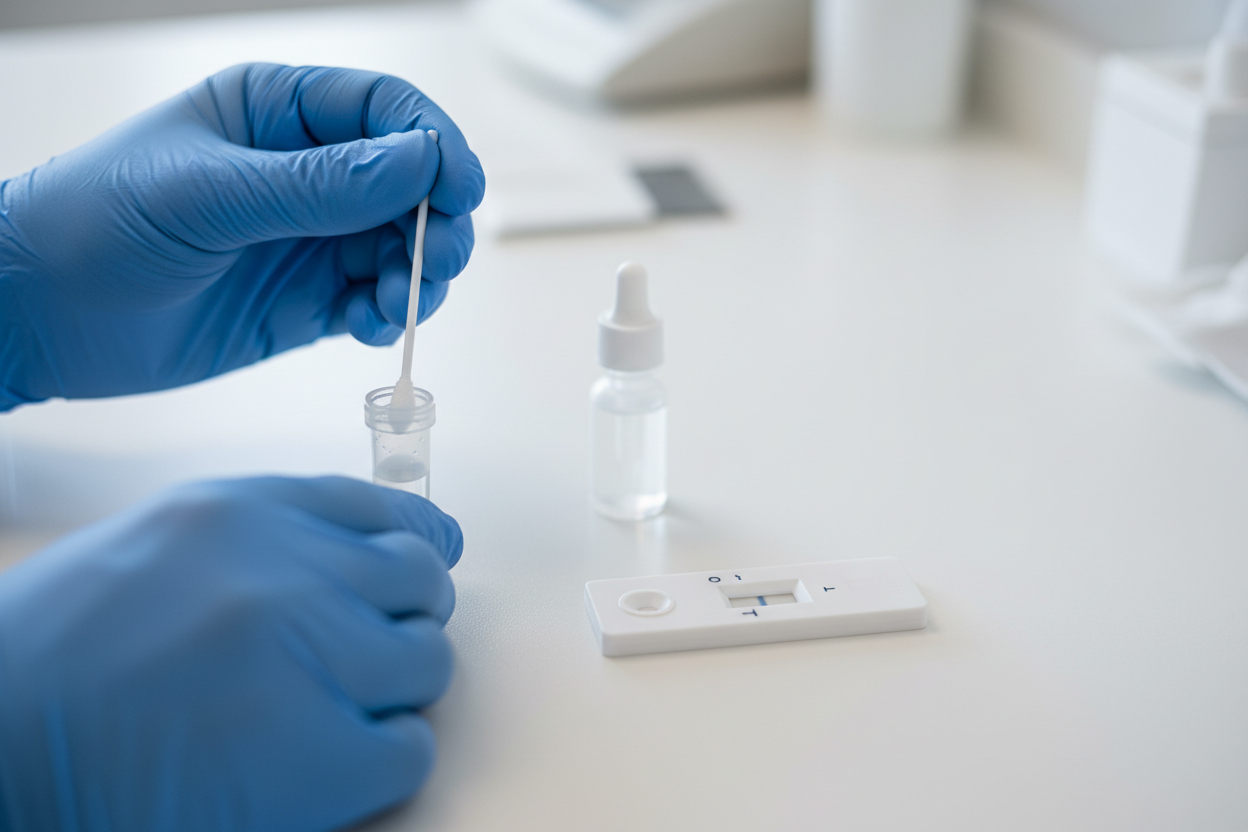
- A sample is collected using a sterile swab or lancet
- The sample is placed in a test buffer or extraction tube
- The processed sample is applied to the test device
- Viral antigens (if present) bind to antibodies on the test strip, creating a visible line
- Results appear within 10 - 15 minutes
Interpreting Results
Rapid test results are typically displayed with control and test lines:
- Positive Result: Both control and test lines appear (usually two lines)
- Negative Result: Only the control line appears (one line)
- Invalid Result: No control line appears; test should be repeated with a new device
Sensitivity and Specificity
The diagnostic performance of antigen rapid tests varies:
- Specificity: Approximately 100%, meaning positive results are highly reliable
- Sensitivity: Varies based on lesion type, viral load, and stage of illness (generally higher with vesicular and pustular lesions)
If you receive a negative result but still have symptoms consistent with mpox, healthcare providers may recommend PCR testing for confirmation, especially if the rash is in early stages (macules or papules) or if you have significant exposure history.
PCR vs. Rapid Test Comparison
Choosing between PCR and rapid antigen tests depends on your specific situation, urgency, and clinical presentation. This comparison table outlines the key differences:
| Feature | PCR Test | Antigen Rapid Test |
|---|---|---|
| Result Timeframe | 2 - 4 days | 10 - 15 minutes |
| Sensitivity | Very High (95%+) | Moderate to High (varies by lesion stage) |
| Specificity | Very High (99%+) | Very High (~100%) |
| Cost | Higher | Lower |
| Location | Laboratory facility | Home, clinic, or point-of-care |
| Equipment Required | Specialized laboratory equipment | No special equipment |
| Sample Types | Lesion swab, blood, respiratory | Lesion swab, blood, respiratory |
| Best For | Definitive confirmation, variant tracking | Rapid screening, initial diagnosis |
When to Use Each Test
Use a Rapid Antigen Test if:
- You need immediate results to guide treatment or isolation decisions
- You have visible lesions consistent with mpox
- You want to perform testing at home or in a community setting
- Cost is a consideration
- You are in the vesicular or pustular stage of infection
Use PCR Testing if:
- You have negative rapid test results but strong clinical suspicion of mpox
- You are in the early macule or papule stage and need confirmation
- Definitive diagnosis is critical for medical management
- You need variant identification (Clade Ib vs. IIb)
- Healthcare providers specifically request PCR confirmation
Who Should Get Tested?
The Robert Koch Institute (RKI) and German Federal Ministry of Health (BMG) have provided guidance on who should prioritize mpox testing. The current assessment indicates that the risk to the general population remains low, but certain groups warrant closer attention.
High-Risk Groups
Testing is particularly important for individuals in these categories:
- Sexual and Close Contacts: People who have had close physical contact or sexual contact with a confirmed mpox case should get tested, especially within 21 days of exposure.
- Healthcare and Laboratory Workers: Those who may have occupational exposure to mpox samples or infected patients should undergo testing if symptoms develop.
- Travelers: Individuals returning from regions with active mpox transmission who develop symptoms should get tested promptly.
- People with Multiple Sex Partners: Given the recent transmission pattern with Clade Ib, sexually active individuals with multiple partners who develop symptoms should consider testing.
- Men Who Have Sex with Men (MSM): Current epidemiological data shows a higher proportion of cases in this population; testing is recommended if symptoms develop.
Symptomatic Individuals
Anyone with a rash characterized by progression through macules, papules, vesicles, pustules, and scabs - especially if accompanied by fever and lymph node swelling - should be tested regardless of risk group status.
Post-Exposure Prophylaxis Considerations
Individuals who have had direct exposure to a confirmed mpox case and who do not yet have symptoms may still benefit from testing, as early detection allows for rapid isolation and contact tracing.
Where to Get an Mpox Test in Germany
Germany provides multiple pathways for mpox testing, varying in accessibility and formality depending on your situation and urgency.
Through the Gesundheitsamt (Public Health Office)
The Gesundheitsamt (local public health authority) is the official point of contact for mpox testing in Germany:
- Testing is free when referred by a physician
- Contact your local Gesundheitsamt for testing sites and procedures
- Positive results are reported to public health authorities for tracking and contact tracing
- Can provide guidance on isolation and care requirements
Through Physicians and Clinics
Your family doctor (Hausarzt) or a dermatologist can:
- Examine your symptoms and determine if testing is appropriate
- Order PCR testing or provide rapid antigen tests
- Discuss results and treatment options
- Provide documentation for workplace or isolation purposes
Home Testing with Rapid Antigen Tests
For those who prefer to test at home, professional-grade mpox antigen rapid tests are available for purchase. These kits include everything needed for self-collection and provide results within 15 minutes. A positive home rapid test should be confirmed with PCR or reported to a physician for further evaluation.
We offer high-quality mpox antigen rapid tests designed for professional use, providing reliable 15-minute results at home or in any setting. These tests meet rigorous quality standards and are suitable for self-screening or use by healthcare professionals.
Online Purchase Considerations
When purchasing mpox tests online, ensure that:
- The test has appropriate CE certification for medical use
- The product has not expired (check manufacture and expiration dates)
- The supplier is reputable and meets German/European medical device standards
- Instructions are available in German or a language you understand
- Storage conditions (temperature, humidity) are maintained during shipping
For more information about available rapid tests and other infectious disease screening options, browse our infectious diseases collection.
What to Do After a Positive Result
A positive mpox test result requires prompt action to prevent transmission and ensure you receive appropriate care. Here is what you should do:
Immediate Steps
- Isolate: Begin isolation immediately, even before contacting authorities. Mpox spreads through direct contact with lesions, bodily fluids, and respiratory droplets. Stay home and avoid contact with others.
- Notify Contacts: Inform anyone you have had close contact with in the 21 days before symptom onset so they can monitor for symptoms and get tested if needed.
- Contact Gesundheitsamt: Report your positive result to your local health authority. They will guide you on isolation duration (typically until all lesions have healed and scabbed over), provide contact tracing support, and monitor your condition.
Medical Care
See a healthcare provider for:
- Confirmation of diagnosis (if diagnosed with a rapid test, PCR confirmation may be requested)
- Assessment of disease severity and risk for complications
- Pain management and supportive care recommendations
- Wound care for lesions to prevent secondary bacterial infection
- Monitoring for symptoms progression
Treatment and Support
Most mpox cases in Germany have been mild and resolved with supportive care. Treatment typically focuses on:
- Pain relief and fever management
- Rest and hydration
- Keeping lesions clean and preventing secondary infection
- Antiviral medications (tecovirimat) in severe cases or for immunocompromised patients
Return to Normal Activities
You can return to normal activities (including work) when:
- All lesions have scabbed over and separated, leaving temporary marks
- Your healthcare provider or Gesundheitsamt determines you are no longer infectious
- Typically 2 - 4 weeks after symptom onset, depending on disease course
Frequently Asked Questions About Mpox Testing
1. How accurate are home mpox rapid tests?
Home mpox antigen rapid tests are highly accurate when used correctly, with specificity around 100% (very few false positives). Sensitivity (detection rate) varies based on lesion stage and viral load but is generally 85% - 95% for obvious pustular lesions. A negative test does not completely rule out mpox, especially in early stages; PCR confirmation may be needed if clinical suspicion is high.
2. Can I test for mpox if I have no symptoms?
Testing asymptomatic individuals exposed to mpox is possible but has limited value. Rapid antigen tests primarily detect active infection with high viral loads, which develop as symptoms appear. If you have been exposed and want to screen, you could perform a rapid test, but absence of symptoms combined with a negative test does not guarantee you won't develop mpox in the coming weeks. Close monitoring for symptoms during the 5 - 21 day incubation period is more important.
3. How long should I isolate after testing positive for mpox?
Isolation should continue until all lesions have completely scabbed over and the scabs have separated. This typically takes 2 - 4 weeks from symptom onset. The Gesundheitsamt provides specific guidance based on your individual case and local regulations.
4. What is the difference between Clade IIb and Clade Ib mpox?
Clade IIb was the dominant variant in the 2022 - 2024 period and generally causes milder disease. Clade Ib, detected in Germany starting December 2025, appears more transmissible and spreads more readily through close contact. Both cause similar clinical presentations, but Clade Ib requires closer epidemiological tracking. PCR testing can identify which clade is causing infection.
5. Is mpox vaccination available in Germany, and should I get vaccinated before testing?
Mpox vaccination is available in Germany, primarily targeting high-risk groups. Vaccination does not prevent you from being tested; if you develop symptoms, testing is still recommended regardless of vaccination status. Vaccination reduces infection risk and disease severity. Consult with your healthcare provider about vaccination eligibility based on your risk factors and exposure history.
Conclusion
Mpox testing has become more accessible and convenient in 2026 than ever before. Whether you choose rapid antigen tests for immediate results or prefer the definitive confirmation of PCR testing, having reliable access to testing is key to early diagnosis and preventing transmission. If you develop symptoms consistent with mpox - especially characteristic skin lesions accompanied by fever and swollen lymph nodes - getting tested should be your priority.
The landscape has changed since the 2022 - 2024 outbreak, with the emergence of more transmissible Clade Ib variants prompting increased vigilance. However, with proper testing, prompt isolation, and appropriate medical care, mpox cases remain manageable and typically mild. Germany's public health infrastructure continues to provide free testing through the Gesundheitsamt and cooperating physicians, while professional-grade rapid tests are increasingly available for home or point-of-care use.
If you are at risk, experiencing symptoms, or simply want the peace of mind that comes with rapid home screening, high-quality mpox rapid tests are now more accessible than ever. Our professional mpox antigen rapid test kits provide reliable 15-minute results in the privacy of your home. Combined with proper precautions and prompt medical consultation if needed, rapid testing represents an important tool in the ongoing effort to contain mpox transmission and protect public health in Germany and beyond.
