
Sermorelin: key takeaways
Sermorelin is a 29-amino-acid GHRH fragment that triggers short growth hormone pulses; it was FDA approved for children with growth hormone deficiency until 2009, and adult data come from small studies with 0.5 to 2 mg. Last reviewed: September 2026.
- Sermorelin is the amidated 29-amino-acid segment of human growth hormone-releasing hormone (GHRH 1-29 amide, GRF 1-29 NH2), the shortest synthetic peptide with full GHRH activity.
- The withdrawn US label used 30 mcg/kg subcutaneously at bedtime for children with growth hormone deficiency; a single 1 mcg/kg intravenous dose served as a diagnostic test.
- Adult studies used 0.5 to 2 mg per injection; IGF-1 rose with 1 mg twice daily but not with 0.5 mg twice daily (Corpas 1992) or 2 mg once nightly (Vittone 1997).
- Reported use is 200 to 300 mcg once daily in the evening, taken from forum posts, a 2026 review and a supplier calculator.
- In pediatric trials, about 1 in 6 patients had injection-site reactions, hypothyroidism occurred in 6.5 percent, and a large share formed anti-GRF antibodies of unclear significance.
- WADA lists sermorelin in S2.2.4 of the 2027 Prohibited List, so it is banned in sport at all times.
Jump to the dosage chart, the reconstitution example or the side effects.
What is sermorelin?
Sermorelin is the amidated 29-amino-acid segment of human growth hormone-releasing hormone (GHRH 1-29 amide, GRF 1-29 NH2) and an agonist at the GHRH receptor.
The compound is also called groliberin or GRF(1-29)NH2. Its CAS number is 86168-78-7, the molecular formula C149H246N44O42S corresponds to a molecular weight of about 3,358 Da (free base), and the ATC codes are H01AC04 (somatropin and agonists) and V04CD03 (diagnostic test of pituitary function). Identity data are recorded in PubChem (CID 16132413).
Structurally, sermorelin is the first 29 residues of the 44-amino-acid human GHRH recorded as UniProt P01286, amidated at the C terminus. The Prakash and Goa review (1999) describes it as the shortest synthetic peptide with the full biological activity of GHRH, and ChEMBL lists it as an agonist at the GHRH receptor (target CHEMBL2032).
EMD Serono marketed sermorelin as GEREF in the United States: a 0.05 mg diagnostic ampule approved December 28, 1990, and 0.5 mg and 1.0 mg vials approved September 26, 1997 for idiopathic growth hormone deficiency in children. In Ireland, GEREF 50 was a diagnostic product from 1991 until its withdrawal in July 2007.
How sermorelin works
Sermorelin activates the GHRH receptor on the anterior pituitary and produces a short growth hormone pulse instead of sustained exposure.
After intravenous dosing, the growth hormone response peaks after about 30 minutes (range 15 to 60 minutes) and lasts 2 to 3 hours. An evening subcutaneous dose of a GHRH(1-29) analog released growth hormone within 10 minutes, and the release lasted about 2 hours. The effect therefore comes as a short pulse rather than as sustained exposure.
The molecule is cleared within minutes. Three documented half-life values describe the same short action: about 4.3 minutes (disappearance half-life of GHRH(1-29)-NH2 in healthy men, Soule 1994), 6 to 7 minutes after intravenous dosing (GEREF 50 prescribing information), and 11 to 12 minutes after intravenous or subcutaneous dosing (former US label). After a 2 mg subcutaneous dose, peak levels were reached in 5 to 20 minutes, and absolute bioavailability was about 6 percent.
Enzymes explain the short action. A plasma dipeptidyl peptidase converts native GHRH(1-44) to the inactive fragment GRH(3-44), with an in vivo half-life of 6.8 minutes (Frohman 1986), and dipeptidyl peptidase IV cleaves GHRH(1-29)-NH2 at the 2-3 bond (Frohman 1989).
Because it tests the somatotroph cells directly, a single 1 mcg/kg intravenous dose was used as a diagnostic stimulation test; the test does not exclude a hypothalamic cause of growth hormone deficiency.
Sermorelin benefits and research evidence
The documented benefits are limited to pediatric growth and small physiologic adult studies, and a 2026 review rates clinically relevant benefits in healthy people as uncertain.
The clearest positive result comes from children: in the Geref International Study Group trial (Thorner et al. 1996), growth velocity roughly doubled during the first year of therapy. Adult studies are small and mixed. Corpas et al. (1992) found higher 24-hour GH and IGF-1 only with 1 mg twice daily, and Vittone et al. (1997) raised nocturnal GH without an IGF-1 change. Two papers by Khorram et al. (1997) used a norleucine-substituted analog, [Nle27]GHRH(1-29)-NH2, rather than sermorelin.
Human studies at a glance
Five published human studies from four cohorts (one pediatric trial with 110 children, three small trials in older adults) and one review cover sermorelin or closely related GHRH(1-29) analogs; two of the adult papers used the [Nle27] analog.
| Study (year) | Population (n) | Dose and route | Duration | Documented result |
|---|---|---|---|---|
| Geref International Study Group (Thorner et al.) 1996 | 110 prepubertal children with GH deficiency (86 evaluable) | 30 mcg/kg s.c. at bedtime | up to 1 year | growth velocity 4.1 +/- 0.9 to 8.0 +/- 1.5 cm/year at 6 months and 7.2 +/- 1.3 at 12 months; fasting glucose unchanged, no excessive IGF-1 rise |
| Prakash and Goa review 1999 | review of pediatric studies | 30 mcg/kg per day as continuous infusion or 3 divided doses vs somatropin 30 mcg/kg once daily | review | smaller gain in growth velocity than somatropin; the approved once-nightly regimen was not directly compared; effect on final height open |
| Corpas et al. 1992 | 10 healthy older men (68.0 +/- 6.2 years) | GHRH(1-29) 0.5 mg or 1 mg s.c. twice daily | 14 days each | only 1 mg twice daily raised 24-hour GH and IGF-1 significantly; phosphate rose; fasting glucose, urinary C-peptide and blood pressure unchanged |
| Vittone et al. 1997 | 11 healthy men, 64 to 76 years | GHRH(1-29) 2 mg s.c. every evening | 6 weeks | nocturnal GH rose; IGF-1, IGFBP-3 and GHBP unchanged; 2 of 6 strength measures improved; body composition unchanged; no placebo group |
| Khorram, Laughlin and Yen 1997 | 10 women and 9 men, 55 to 71 years | [Nle27]GHRH(1-29)-NH2 10 mcg/kg s.c. at 9 pm | 16 weeks (after 4 weeks placebo) | IGF-1 rose within 2 weeks and neared baseline by week 16; skin thickness rose; lean mass, insulin sensitivity, well-being and libido rose only in men; sleep unchanged; not identical with sermorelin |
| Khorram et al. 1997 (immune) | same cohort (19 people) | same as above | 16 weeks | 12-hour integrated GH secretion +107 percent (men) and +70 percent (women), IGF-1 +28 percent; immune parameters activated; the companion paper on this cohort reports transient hyperlipidemia as the only side effect |
Sermorelin before and after
The documented before-and-after results are study endpoints: children grew faster, and in one 6-week adult trial nocturnal GH rose while body composition stayed unchanged.
In the pediatric trial, mean growth velocity moved from 4.1 cm/year at baseline to 8.0 cm/year at 6 months and 7.2 cm/year at 12 months. In healthy older men, 2 mg nightly raised nocturnal GH over 6 weeks, while IGF-1, IGFBP-3, GH binding protein and body composition did not change; 2 of 6 strength measures improved, and the study had no placebo group. With the [Nle27] analog, IGF-1 rose within 2 weeks and approached baseline again by week 16. Before-and-after photos or timeline claims from practice are not study data.
Sermorelin for weight loss and fat loss
No study has tested sermorelin for weight or fat loss: in the only GHRH(1-29) trial that measured body composition (Vittone 1997, no placebo group) it did not change, and a study of the [Nle27] analog found higher lean mass in men only (Khorram 1997).
The Khorram trial reports higher lean mass, better insulin sensitivity and higher well-being in men only; in women, skin thickness rose but lean mass did not. A 2026 review of GH- and IGF-1-modulating peptides rates clinically relevant benefits of GHRH analogs in healthy people as uncertain.
Sermorelin dosage
There is no approved adult treatment dose: the withdrawn US label specified 30 mcg/kg at bedtime for children with growth hormone deficiency, the Irish diagnostic GEREF 50 used a single 1 mcg/kg intravenous dose, adult studies used 0.5 to 2 mg, and the practice figures below are reported use, not a recommendation.
Doses given in mcg/kg apply per kilogram of body weight. To convert any milligram figure into milliliters and syringe units, use the peptide calculator.
Sermorelin dosage chart: label and studies
The withdrawn label used 30 mcg/kg at bedtime in children; adult studies used 0.5 to 2 mg per injection.
| Setting | Dose | Route and schedule | Notes |
|---|---|---|---|
| US label GEREF, children with idiopathic GH deficiency | 30 mcg/kg (0.03 mg/kg) | s.c. once daily at bedtime | same dose as the 1996 efficacy study |
| GEREF 50 prescribing information, diagnostic test | 1.0 mcg/kg | i.v. once in the morning after overnight fast | stimulates somatotroph cells directly; does not exclude a hypothalamic cause |
| Prakash and Goa review 1999, earlier pediatric regimens | 30 mcg/kg per day | continuous infusion or 3 divided doses | smaller growth gain than somatropin 30 mcg/kg once daily |
| Corpas 1992, healthy older men | 0.5 mg and 1 mg | s.c. twice daily, 14 days per stage | significant GH and IGF-1 effects only at 1 mg twice daily |
| Vittone 1997, healthy older men | 2 mg | s.c. every evening, 6 weeks | nocturnal GH rose, IGF-1 unchanged |
| Khorram 1997, older adults | 10 mcg/kg | s.c. at 9 pm, 16 weeks | [Nle27]GHRH(1-29)-NH2 analog, not sermorelin |
How much sermorelin per day: reported use
Reported use clusters on 200 to 300 mcg once daily in the evening, well below the daily amounts used in adult studies.
| Source | Dose | Frequency and cycle | Notes |
|---|---|---|---|
| Review 2026 (summary of self-reported online dosing, Dominikowski et al.) | 200 to 300 mcg | s.c. once daily, usually bedtime on an empty stomach | review summary; figure traced to one website protocol (Peptide Initiative) |
| Peptide Critic thread 341 (protocol post) | weeks 1 to 2: 200 mcg; weeks 3 to 6: 300 mcg; weeks 6 to 8: 400 mcg; optional 500 mcg | evening; 8 to 12 weeks on, then 2 to 4 weeks off | single protocol post |
| Peptide Critic thread 2260 (reconstitution math) | 200 mcg equals 6 units (10 mg + 3 ml) or 10 units (10 mg + 5 ml) | one of 3 users doses Monday to Friday | 10 mg vials |
| Supplier calculator (BergdorfBio) | conservative 50 mcg, standard 100 mcg, higher range 200 to 300 mcg per injection | 1 to 3 times daily, evening preferred; usual range 50 to 300 mcg | calculator presets per injection |
No human study shows an effect at 200 to 300 mcg; adult studies used about 3 to 10 times that amount per day, and IGF-1 did not rise with 0.5 mg twice daily (Corpas 1992) or 2 mg once nightly (Vittone 1997).
How to reconstitute sermorelin
To reconstitute a 5 mg sermorelin vial, add 2 ml bacteriostatic water and swirl gently until clear; the solution then holds 2.5 mg/ml, so 200 mcg is 0.08 ml or 8 units on a U-100 syringe.
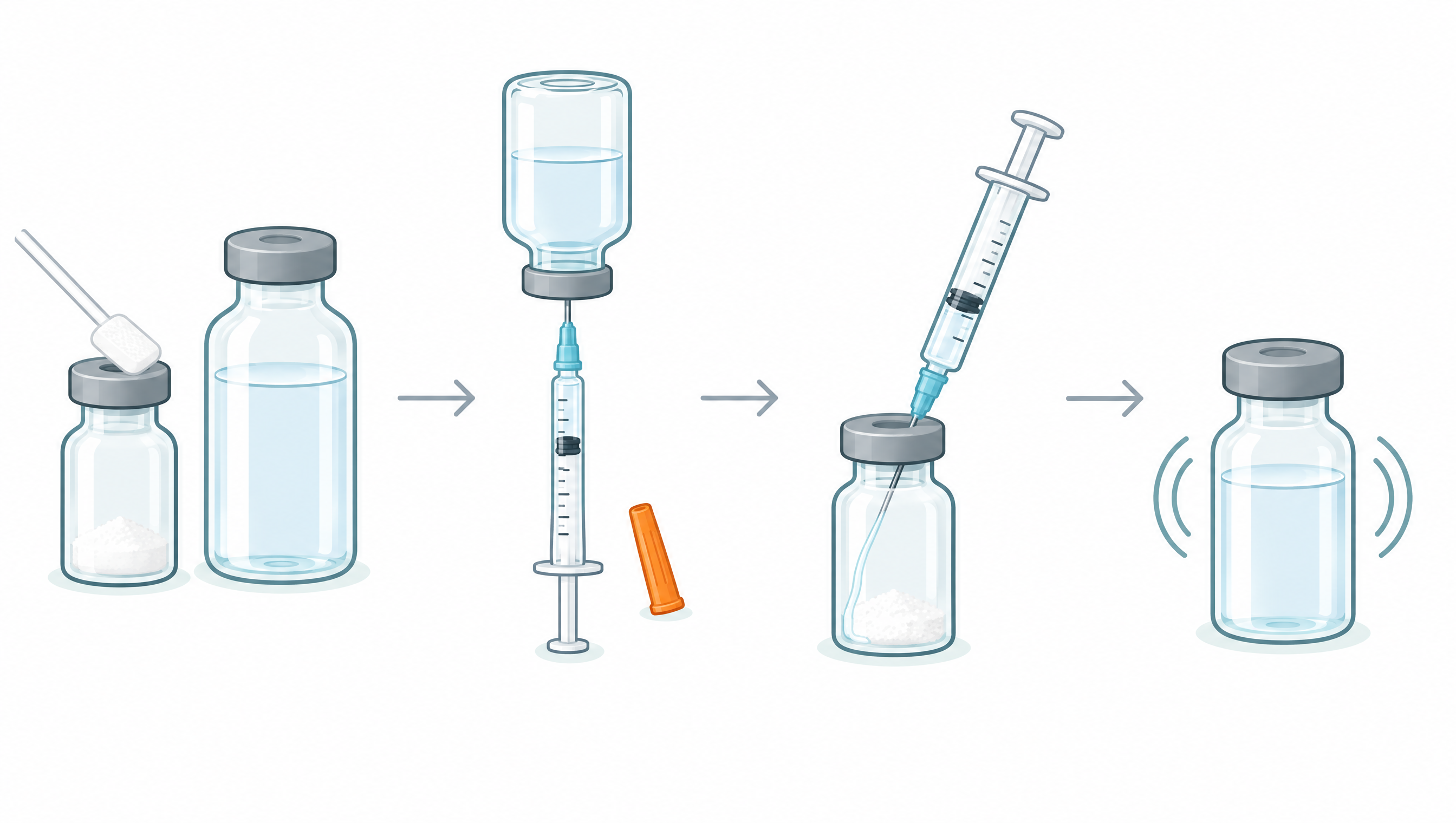
The calculation chain behind that result is one formula: concentration (mg/ml) equals vial content (mg) divided by solvent (ml), volume (ml) equals dose (mg) divided by concentration, and units on a U-100 syringe equal volume (ml) times 100. The peptide calculator runs this chain for other vial sizes, water volumes and doses.
How to mix sermorelin
- Materials: one sermorelin vial (commonly 5 mg), bacteriostatic water for injection (USP), a U-100 insulin syringe and a puncture-proof sharps container.
- Draw 2 ml of bacteriostatic water and add it slowly to the vial. Swirl gently until the powder dissolves; do not shake.
- Check that the solution is clear, without particles or discoloration.
- Date the opened bacteriostatic water bottle and discard it after 28 days unless the label gives a different date.
- Use the reconstituted solution within about 3 weeks kept at 2 to 8 degrees Celsius (supplier statement; the original GEREF label used the reconstituted product immediately).
Sermorelin units on a U-100 syringe (worked example)
At 2.5 mg/ml, every 100 mcg of sermorelin is 0.04 ml, or 4 units on a U-100 syringe.
The worked example in three steps: (1) concentration = 5 mg / 2 ml = 2.5 mg/ml; (2) volume = 0.2 mg / 2.5 mg/ml = 0.08 ml; (3) units on a U-100 syringe = 0.08 ml x 100 = 8 units. One unit on a U-100 syringe is 0.01 ml.
| Vial | BAC water | Concentration | Dose | Volume | Units (U-100) |
|---|---|---|---|---|---|
| 5 mg | 2 ml | 2.5 mg/ml | 200 mcg | 0.08 ml | 8 |
| 5 mg | 2 ml | 2.5 mg/ml | 300 mcg | 0.12 ml | 12 |
| 5 mg | 2 ml | 2.5 mg/ml | 100 mcg | 0.04 ml | 4 |
| 5 mg | 2 ml | 2.5 mg/ml | 2 mg (Vittone study dose) | 0.8 ml | 80 |
| 10 mg | 3 ml | 3.33 mg/ml | 200 mcg | 0.06 ml | 6 |
| 10 mg | 5 ml | 2 mg/ml | 200 mcg | 0.10 ml | 10 |
All units are marks on a U-100 insulin syringe, not international units. A 5 mg sermorelin vial contains 25 calculated doses of 200 mcg. On a U-40 syringe one unit is 0.025 ml, so the same 0.08 ml would read 3.2 units; drawing 8 U-100 units on a U-40 syringe instead gives 0.2 ml, or 500 mcg, which is 2.5 times the intended amount (Barrera 2019). Read the U-100 print on the syringe.
Sermorelin injection: how to inject subcutaneously
Inject the dose from a U-100 insulin syringe at 90 degrees, into a lifted skin fold if the needle is longer than 4 mm, hold for about 10 seconds and rotate sites each time.
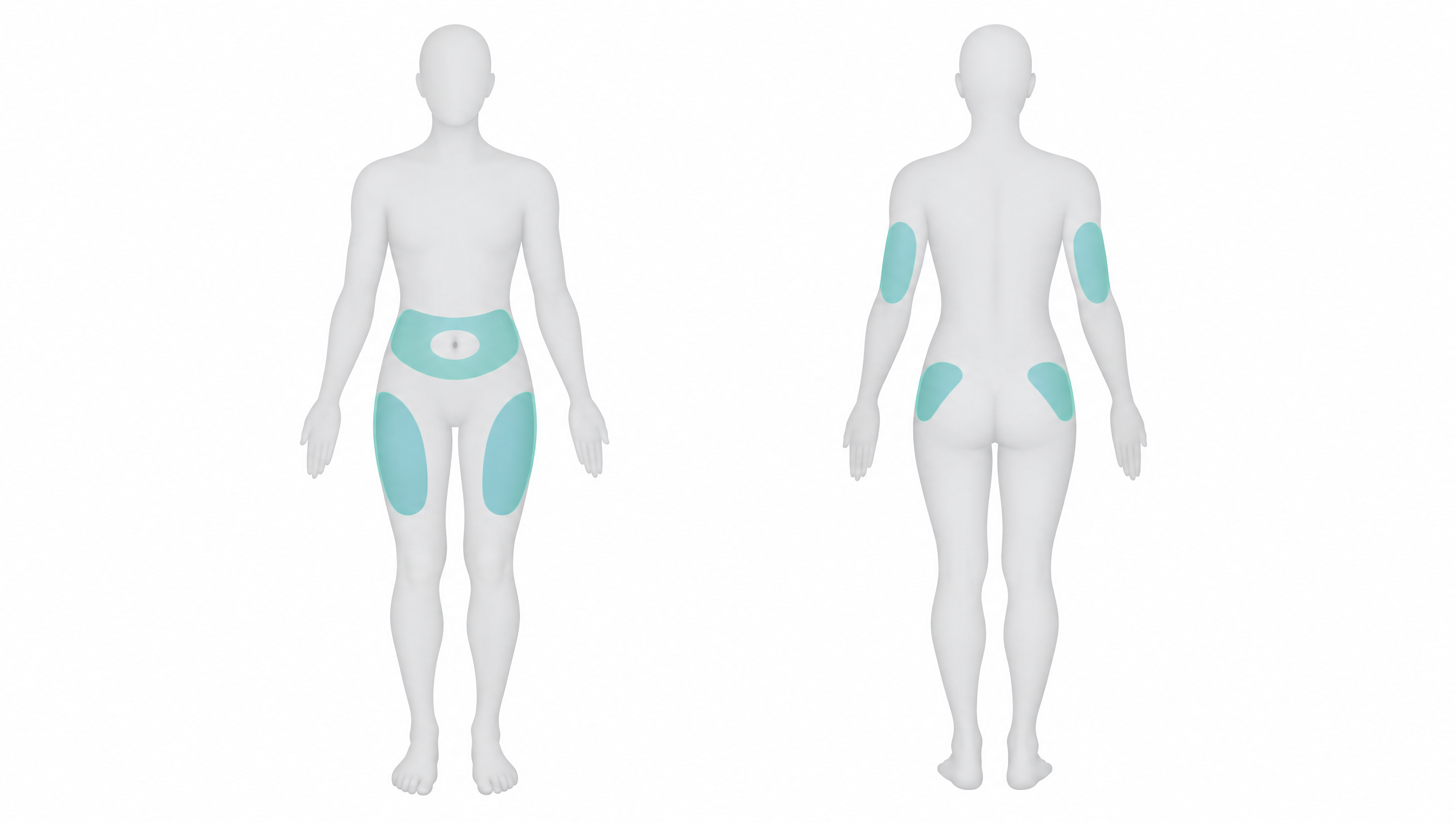
- Draw your dose in units into a U-100 insulin syringe.
- Use the shortest available syringe needle; for needles longer than 4 mm, lift a skin fold.
- Inject at 90 degrees to the surface of the skin fold.
- Keep the needle in the skin for at least 5 seconds after pressing the plunger (counting to 10 is better), then withdraw it at the same angle and release the fold.
- Rotate sites: abdomen (at least 2 cm from the navel), upper third of the front and outer thigh, buttocks, and the back of the upper arm if someone else injects. Move each injection at least 1 cm from the previous one and avoid scars, bruises and lipohypertrophy.
- Use a new syringe and needle for every injection. If there is bleeding, press the site with gauze, do not rub.
- Dispose of needles and syringes immediately in a puncture-proof container and follow local rules (FDA sharps guidance).
These injection steps follow the FITTER 2016 and FIT UK 2019 recommendations, written for insulin and applied here to subcutaneous peptides. The full walkthrough sits in the retatrutide injection guide. For equipment, see injection supplies and injection accessories.
Sermorelin side effects
In pediatric trials about 1 in 6 patients had injection-site reactions, 6.5 percent developed hypothyroidism, and a large share developed anti-GRF antibodies of unclear significance; headache, flushing and dizziness each occurred in under 1 percent.
The label called for thyroid tests before and during therapy. A 1999 review lists transient facial flushing and injection-site pain as the most common events; facial flushing mainly occurs after the intravenous diagnostic dose. Long-term safety data in adults at practice doses are missing, and a 2026 sports medicine review points to absent rigorous safety data for unapproved peptides.
| Dose or setting | Event | Frequency |
|---|---|---|
| Children 30 mcg/kg per day s.c. (clinical studies, 350 patients exposed) | injection-site reactions (pain, swelling, redness) | about 1 in 6; 3 of 350 stopped for this reason |
| Long-term therapy in clinical studies | hypothyroidism | 6.5 percent; label advises thyroid tests before and during therapy |
| Long-term therapy in clinical studies | anti-GRF antibodies at least once | large share of treated patients; significance unclear |
| Clinical studies | headache, flushing, difficulty swallowing, dizziness, hyperactivity, drowsiness, hives (urticaria) | each under 1 percent |
| Diagnostic test 1 mcg/kg i.v. | facial redness, injection-site pain, redness and swelling, nausea, headache, vomiting, taste disturbance, pallor, chest tightness | facial heat, facial redness and injection pain occasionally, usually fading within minutes |
| [Nle27]GHRH(1-29)-NH2 10 mcg/kg evenings (Khorram 1997) | transient hyperlipidemia | only reported side effect, resolved by study end |
| Review 2026 (summary) | injection-site pain, short flush, nausea, dizziness, headache, rare allergic reactions, transient prolactin rise | no frequency data; long-term safety data missing |
| Pregnancy and lactation | pregnancy category C (US label); the diagnostic prescribing information lists pregnancy and lactation as contraindications | no frequency data; teratology studies in rat and rabbit at 0.5 mg/kg per day showed minor fetal variations |
Interactions and response-blunting factors listed in the GEREF 50 prescribing information include somatostatin, insulin, glucocorticoids, COX inhibitors (aspirin, indomethacin) and anticholinergics (atropine). Obesity, hyperglycemia and elevated free fatty acids are associated with a blunted GH response, and untreated hypothyroidism can impair the response. Discuss any existing conditions and medicines with a clinician before use.
Sermorelin compared with tesamorelin, ipamorelin and CJC-1295
Sermorelin and tesamorelin both act within minutes, while CJC-1295 with DAC has an estimated half-life of days; the GHRH analogs differ mainly in structure, approval status and the size of their human studies.
| Peptide | Receptor | Half-life (documented) | Human evidence | Status |
|---|---|---|---|---|
| Sermorelin (GHRH 1-29 amide) | GHRH receptor | 4.3 +/- 1.4 minutes (Soule 1994); 6 to 7 minutes (prescribing information); 11 to 12 minutes (former US label) | pediatric growth trial, small adult trials | approvals 1990 and 1997, ended effective June 18, 2009 |
| Tesamorelin (GHRH 1-44 with hexenoyl residue) | GHRH receptor | 26 minutes in healthy adults and 38 minutes in people with HIV for original EGRIFTA 2 mg after 14 days; 8 minutes for EGRIFTA SV; 11 minutes for EGRIFTA WR after a single dose | randomized, placebo-controlled trials in HIV lipodystrophy (visceral fat reduced by about 10.9 to 18 percent over 26 weeks) | approved in the United States (Egrifta 2010, EGRIFTA WR 2025) |
| CJC-1295 with DAC | GHRH receptor | estimated 5.8 to 8.1 days | 3 studies in 63 healthy volunteers | not approved by FDA or EMA; WADA S2.2.4 (the list names CJC-1295) |
| CJC-1295 without DAC (Mod GRF 1-29) | GHRH receptor | no human value reported | no peer-reviewed human studies (evidence level D) | not approved; covered by WADA S2.2.4 as a GHRH analog (the list names CJC-1295); Mod-GRF is named in the annex to the German Anti-Doping Act, not in the WADA list |
| Ipamorelin | ghrelin (GHS) receptor | terminal 2 hours after intravenous infusion | phase 2 after intravenous dosing (postoperative ileus), no human PK after subcutaneous dosing | not approved by FDA or EMA; FDA category 2 for 503B since September 29, 2023 |
Tesamorelin vs sermorelin
Tesamorelin is a 44-amino-acid GHRH analog with a hexenoyl residue and a current US approval (Egrifta), while sermorelin is the 29-amino-acid fragment whose approvals ended effective June 18, 2009; the documented difference lies in structure, approval and evidence rather than in a longer tesamorelin action.
Both work in the minutes range. Documented half-lives are 26 minutes in healthy adults and 38 minutes in people with HIV for original EGRIFTA 2 mg after 14 days, 8 minutes for EGRIFTA SV and 11 minutes for EGRIFTA WR after a single dose, and 11 to 12 minutes for sermorelin in the former US label. Approval history is the sharper contrast: Egrifta was approved November 10, 2010 for excess abdominal fat in people with HIV and lipodystrophy, and EGRIFTA WR followed on March 25, 2025, while the GEREF approvals ended in 2009. Evidence differs too: tesamorelin has randomized, placebo-controlled trials with visceral-fat endpoints, sermorelin has one pediatric growth trial and small adult studies. For research material, see the tesamorelin research product, and for dosing details the tesamorelin dosing guide.
Sermorelin vs ipamorelin
Sermorelin acts at the GHRH receptor, while ipamorelin is a pentapeptide at the ghrelin (GHS) receptor that has been studied in humans only after intravenous dosing, and its phase 2 trial after bowel surgery showed no significant benefit.
In pigs, ipamorelin raised ACTH and cortisol no more than GHRH did, even at more than 200 times the ED50, and comparable human data are lacking (Raun et al. 1998). The human phase 2 study used 0.03 mg/kg intravenously twice daily after bowel resection and met no significant efficacy endpoint (Beck et al. 2014). No controlled human data exist for combining sermorelin with ipamorelin. In the United States, the FDA placed ipamorelin acetate in category 2 for 503B outsourcing facilities on September 29, 2023, citing safety risks.
Sermorelin vs CJC-1295 (with and without DAC)
CJC-1295 is a substituted GHRH(1-29) analog: the DAC form has an estimated half-life of 5.8 to 8.1 days and raised GH for 6 days or more after a single injection, while the form without DAC has no peer-reviewed human data.
Human data on CJC-1295 with DAC come from three studies with 63 healthy volunteers; after a single injection, GH rose 2- to 10-fold for 6 days or longer and IGF-1 1.5- to 3-fold for 9 to 11 days (Teichman et al. 2006). The form without DAC, also called Mod GRF 1-29, is rated evidence level D in a 2026 review. The FDA warns that at least five different CJC-1295 substances circulate under at least nine names. Both CJC-1295 and sermorelin fall under WADA S2.2.4.
Sermorelin legal status and doping
As of September 2026 no US approval for sermorelin remains in force, and WADA lists it in S2.2.4 of the 2027 Prohibited List (published September 21, 2026, in effect from January 1, 2027).
In the EU, the only documented authorization was GEREF 50 in Ireland, a diagnostic product approved in 1991 and withdrawn in July 2007.
Is sermorelin FDA approved?
No. Sermorelin is not currently FDA approved: GEREF was approved in 1990 as a diagnostic agent and in 1997 for pediatric growth hormone deficiency, and both approvals ended effective June 18, 2009, not for safety or effectiveness reasons.
EMD Serono stopped selling both GEREF products in 2008 and asked for the approvals to be withdrawn. In 2013 the FDA determined that the products were not withdrawn for reasons of safety or effectiveness, which keeps generic applications eligible. Drugs@FDA lists NDA 020443 as discontinued.
US compounding pharmacies may only use bulk substances that meet a USP/NF monograph, are part of an FDA-approved drug, or appear on the 503A bulk list. The FDA category list updated May 14, 2026 does not place sermorelin in any category. Outsourcing facilities reported compounded injections with sermorelin plus ipamorelin between 2017 and 2020, and sermorelin was not on the agenda of the Pharmacy Compounding Advisory Committee meeting of July 23 to 24, 2026.
Sermorelin and doping (WADA 2027)
WADA names sermorelin explicitly in S2.2.4 of the 2027 Prohibited List, so it is banned in sport at all times, and a 2026 nano-LC-MS method detects it in urine at levels down to 0.5 ng/ml.
The list was adopted by the WADA Executive Committee on September 10, 2026 and published September 21, 2026. S2 substances are banned in and out of competition; the wording of S2.2.4 is unchanged from the 2026 list. The detection method also identifies the main metabolite (Uçaktürk and Nemutlu 2026). In Germany, the annex to the Anti-Doping Act (AntiDopG) lists sermorelin among growth hormone-releasing factors.
Frequently asked questions
What is sermorelin?
Sermorelin is the amidated 29-amino-acid segment of human growth hormone-releasing hormone (GHRH 1-29 amide) and an agonist at the GHRH receptor. It prompts the pituitary to release growth hormone in a short pulse. EMD Serono sold it as GEREF, first as a diagnostic agent in 1990 and from 1997 for idiopathic growth hormone deficiency in children.
Is sermorelin FDA approved?
No. Sermorelin is not currently FDA approved. GEREF was approved December 28, 1990 as a diagnostic agent and September 26, 1997 for pediatric growth hormone deficiency. EMD Serono discontinued the products in 2008, the approvals ended effective June 18, 2009, and the FDA found in 2013 that they were not withdrawn for safety or effectiveness reasons.
How much sermorelin per day is typical?
The pediatric label used 30 mcg/kg at bedtime. Adult studies used 0.5 to 2 mg per injection (0.5 or 1 mg twice daily, or 2 mg nightly). Reported use is 200 to 300 mcg in the evening, taken from forum posts, a 2026 review and a supplier calculator. The dosage chart lists routes and study durations.
What are the side effects of sermorelin?
In pediatric trials, about 1 in 6 patients had injection-site reactions, 6.5 percent developed hypothyroidism, and a large share formed anti-GRF antibodies of unclear significance. Headache, flushing, dizziness and hives (urticaria) each occurred in under 1 percent. Long-term safety data in adults at practice doses are missing.
What do sermorelin before and after results show?
Documented before-and-after results are study endpoints. In children, mean growth velocity rose from 4.1 to 8.0 cm/year at 6 months and 7.2 cm/year at 12 months. In older men, 6 weeks of 2 mg nightly raised nocturnal GH without changing IGF-1 or body composition. Forum timelines and photos are not study data.
Does sermorelin help with weight loss or fat loss?
No study has tested sermorelin for weight or fat loss. In the only GHRH(1-29) trial that measured body composition (Vittone 1997, no placebo group) it did not change, and a study of the [Nle27] analog found higher lean mass in men only (Khorram 1997).
Tesamorelin vs sermorelin: what is the difference?
Tesamorelin is a 44-amino-acid GHRH analog with a hexenoyl residue, approved in the United States as Egrifta (2010) and EGRIFTA WR (2025). Sermorelin is the 29-amino-acid fragment whose approvals ended in 2009. Both work within minutes: documented half-lives are 26 minutes in healthy adults and 38 minutes in people with HIV for original EGRIFTA, 8 minutes for EGRIFTA SV and 11 minutes for EGRIFTA WR.
Sermorelin vs ipamorelin: what is the difference?
Sermorelin is a GHRH receptor agonist that releases GH from the pituitary. Ipamorelin is a pentapeptide at the ghrelin (GHS) receptor, studied in humans only after intravenous dosing; its phase 2 trial after bowel surgery showed no significant benefit. In pigs, ipamorelin raised ACTH and cortisol no more than GHRH did; comparable human data are lacking.
Can you take sermorelin orally?
Sermorelin was approved only as an injection, and the human studies cited in this guide used subcutaneous or intravenous dosing. Even after subcutaneous injection only about 6 percent reaches the bloodstream, and enzymes such as DPP-IV break the peptide down within minutes.
How do you reconstitute sermorelin and read U-100 units?
Dissolve 5 mg in 2 ml of bacteriostatic water to get 2.5 mg/ml. Then 200 mcg is 0.08 ml, or 8 units on a U-100 syringe (1 unit = 0.01 ml). Swirl, do not shake, and check that the solution is clear. Drawing U-100 units on a U-40 syringe gives 2.5 times the intended amount.
Are sermorelin reviews and Reddit reports reliable?
Experience reports are anecdotal and cannot replace controlled data. The practice figures in this guide come from a protocol post and a reconstitution thread on Peptide Critic, a 2026 review summarizing online dosing, and a supplier calculator, and they are listed in the reported use table. None of these figures comes from a controlled trial.
Is sermorelin banned in sports?
Yes. The WADA 2027 Prohibited List (published September 21, 2026, in effect from January 1, 2027) names sermorelin in S2.2.4, and S2 substances are banned at all times. A nano-LC-MS method detects sermorelin and its main metabolite in urine down to 0.5 ng/ml.
Sources
- RxList: Sermorelin Acetate, Side Effects, Uses, Dosage (US label reproduction, FDA revision 2001).
- PubChem: Sermorelin (CID 16132413).
- Prakash A, Goa KL: Sermorelin: a review of its use in the diagnosis and treatment of children with idiopathic growth hormone deficiency. BioDrugs 1999;12(2):139-57.
- EMBL-EBI ChEMBL: Sermorelin acetate, mechanism of action (CHEMBL1201490).
- Serono Limited / HPRA: GEREF 50, Summary of Product Characteristics (PA 285/6/1), 2004.
- Khorram O, Laughlin GA, Yen SS: Endocrine and metabolic effects of long-term administration of [Nle27]growth hormone-releasing hormone-(1-29)-NH2 in age-advanced men and women. J Clin Endocrinol Metab 1997;82(5):1472-9.
- Frohman LA et al.: Rapid enzymatic degradation of growth hormone-releasing hormone by plasma in vitro and in vivo to a biologically inactive product. J Clin Invest 1986;78(4):906-13.
- FDA, HHS: Determination That GEREF (Sermorelin Acetate) Injection ... Were Not Withdrawn From Sale for Reasons of Safety or Effectiveness (Docket FDA-2012-P-1071). Federal Register 2013.
- FDA CDER: Drugs@FDA, NDA 020443 (GEREF, discontinued).
- WorldHealth.net: Geref (sermorelin acetate for injection), US prescribing information reproduction, 2005.
- Dominikowski A et al.: The emerging landscape of performance-enhancing peptides modulating GH-IGF1 axis. Front Endocrinol 2026;17:1822475.
- Thorner M et al.; Geref International Study Group: Once daily subcutaneous growth hormone-releasing hormone therapy accelerates growth in growth hormone-deficient children during the first year of therapy. J Clin Endocrinol Metab 1996;81(3):1189-96.
- Corpas E et al.: Growth hormone (GH)-releasing hormone-(1-29) twice daily reverses the decreased GH and insulin-like growth factor-I levels in old men. J Clin Endocrinol Metab 1992;75(2):530-5.
- Vittone J et al.: Effects of single nightly injections of growth hormone-releasing hormone (GHRH 1-29) in healthy elderly men. Metabolism 1997;46(1):89-96.
- Khorram O, Yeung M, Vu L, Yen SS: Effects of [norleucine27]growth hormone-releasing hormone (GHRH) (1-29)-NH2 administration on the immune system of aging men and women. J Clin Endocrinol Metab 1997;82(11):3590-6.
- Mendias CL, Awan TM: Safety and Efficacy of Approved and Unapproved Peptide Therapies for Musculoskeletal Injuries and Athletic Performance. Sports Med 2026;56(8):1921-1935.
- FDA: Bulk Drug Substances Used in Compounding Under Section 503A of the FD&C Act (content current May 14, 2026).
- FDA: Bulk Drug Substances Nominated for Use in Compounding Under Section 503A (Categories 1-3), updated May 14, 2026.
- FDA: Safety Risks Associated with Certain Bulk Drug Substances Nominated for Use in Compounding (content current April 22, 2026).
- FDA, HHS: Pharmacy Compounding Advisory Committee; Notice of Meeting (Docket FDA-2025-N-6895). Federal Register 2026.
- Peptide Critic Community: Sermorelin Research Dosing Protocol (thread 341), 2025.
- Peptide Critic Community: New to peptide (thread 2260), 2026.
- BergdorfBio: sermorelin product page and peptide calculator (accessed September 2026).
- Theratechnologies / FDA: EGRIFTA (tesamorelin for injection) Prescribing Information, 2010.
- FDA CDER: Approval Package, NDA 22-505, Egrifta, 2010.
- Theratechnologies: FDA approval for EGRIFTA WR (tesamorelin F8), March 25, 2025.
- Jetté L et al.: Human growth hormone-releasing factor (hGRF)1-29-albumin bioconjugates activate the GRF receptor on the anterior pituitary in rats: identification of CJC-1295. Endocrinology 2005;146(7):3052-8.
- Teichman SL et al.: Prolonged stimulation of growth hormone (GH) and insulin-like growth factor I secretion by CJC-1295. J Clin Endocrinol Metab 2006;91(3):799-805.
- Raun K et al.: Ipamorelin, the first selective growth hormone secretagogue. Eur J Endocrinol 1998;139(5):552-61.
- Beck DE et al.; Ipamorelin 201 Study Group: Prospective, randomized, controlled, proof-of-concept study of the ghrelin mimetic ipamorelin for the management of postoperative ileus in bowel resection patients. Int J Colorectal Dis 2014;29(12):1527-34.
- World Anti-Doping Agency: WADA publishes 2027 Prohibited List (news release, September 21, 2026).
- World Anti-Doping Agency: Prohibited List 2027.
- Uçaktürk E, Nemutlu E: Analysis of growth hormone releasing hormone and its analogs in urine using nano liquid chromatography coupled with quadrupole/orbitrap mass spectrometry. J Pharm Biomed Anal 2026;268:117207.
- Health Products Regulatory Authority (HPRA): Withdrawn Medicines, GEREF 50 (withdrawn July 2007).
- Frohman LA et al. J Clin Invest 1989;83(5):1533-40 (PMID 2565342).
- Soule S, King JA, Millar RP. J Clin Endocrinol Metab 1994;79(4):1208-11 (PMID 7962295).
- Hospira / Pfizer: Bacteriostatic Water for Injection, USP (DailyMed).
- Centers for Disease Control and Prevention: Preventing Unsafe Injection Practices, 2024.
- Barrera F, Murvelashvili N: Poorly Controlled Type 3c Diabetes due to Use of Veterinarian Insulin Syringes. Case Reports in Endocrinology 2019.
- Frid AH et al.: New Insulin Delivery Recommendations (FITTER 2016). Mayo Clin Proc 2016.
- Forum for Injection Technique (FIT) UK: The UK Injection and Infusion Technique Recommendations, 5th edition, 2019.
- US Food and Drug Administration: Best Way to Get Rid of Used Needles and Other Sharps, 2023.
- German Anti-Doping Act (AntiDopG), annex to Section 2(3): list of doping substances.

Leave a comment
All comments are moderated before being published.
This site is protected by hCaptcha and the hCaptcha Privacy Policy and Terms of Service apply.