

Antiviral Resistance in SARS-CoV-2: An Update
Antiviral resistance in SARS-CoV-2 is rare, but a growing challenge. Certain mutations, such as S144A and E802D, can reduce the efficacy of medicines such as Nirmatrelvir and Remdesivir. Immunocompromised patients in particular are at risk, as the virus can mutate for longer in them.
HighTop RSV & Influenza A/B + Corona Combination Rapid Test 4in1 20 pieces, BBD 12/27
Key Findings:
Key Takeaway:
-
Affected medicines:
- Paxlovid (Nirmatrelvir): Efficacy impaired by Mpro mutations (e.g. S144A, H172Y).
- Remdesivir: Resistance due to RdRp mutations (e.g. E802D, V792I).
Quick Overview (Comparison of the Mutations):
| Mutation | Affected Protein | Resistance to | Frequency in Patients |
|---|---|---|---|
| S144A | Main protease (Mpro) | Nirmatrelvir (Paxlovid) | Rare |
| E802D | RNA polymerase (RdRp) | Remdesivir | Rare |
| V792I | RNA polymerase (RdRp) | Remdesivir | 7 % in immunocompromised patients |
Conclusion: Early treatment, vaccinations and global monitoring are crucial to minimise resistance and ensure effective therapies.
Latest research on SARS-CoV-2 resistance
A precise understanding of the mechanisms that promote antiviral resistance, as well as their global spread, is crucial for the targeted further development of treatment approaches.
How resistance develops
Two key factors drive the emergence of resistance:
| Resistance factor | Description |
|---|---|
| Viral replication | Mutations arise from errors during the virus's RNA synthesis. |
| Therapeutic pressure | The use of antiviral drugs favors the selection of resistant strains. |
These mechanisms promote the spread of resistant variants, which are analyzed worldwide by monitoring systems such as GISAID.
Global spread of resistant strains
Studies have identified the V792I substitution in about 7 % of viruses isolated from immunocompromised patients, a significantly higher percentage compared with the general population. In addition, regional differences in immunity status influence how resistant variants spread.
A better understanding of such mutations is essential for assessing their role in the development of resistance more precisely.
Significant resistance mutations
Certain mutations are of particular focus:
| Mutation | Affected protein | Resistance to |
|---|---|---|
| S144A, H172Y | Main protease (Mpro) | Nirmatrelvir |
| E802D | RNA polymerase (RdRp) | Remdesivir |
| V792I | RNA polymerase (RdRp) | Remdesivir |
These mutations could impair the efficacy of existing drugs and therefore require continuous monitoring.
Common Antiviral Medications and Their Efficacy
Assessing how effective antiviral medications are is crucial for minimizing the risk of resistance.
Overview of Antiviral Medications
Three frequently used medications work in different ways:
| Medication | Mode of Action | Key Details |
|---|---|---|
| Remdesivir | Inhibits viral RNA polymerase | Prevents replication of viral RNA |
| Molnupiravir | Mutagen for viral RNA | Leads to errors in RNA replication |
| Paxlovid | Inhibits viral proteases | Combination of nirmatrelvir and ritonavir |
Development of Resistance to Antiviral Medications
According to global analyses, resistance occurs rarely. Nevertheless, the use of antiviral agents can create selective pressure that promotes resistant virus variants, especially in patients with a weakened immune system.
| Medication | Mutations and Effects |
|---|---|
| Paxlovid | S144A, H172Y, efficacy impaired by Mpro mutations |
| Remdesivir | E802D, reduces efficacy through changes in RdRp |
| Molnupiravir | Various RdRp mutations affect the effect |
For example, the mutations S144A and H172Y weaken the effect of Paxlovid. In the case of Remdesivir, the E802D mutation leads to lower efficacy.
Strategies for Maintaining Efficacy
To preserve the treatment options in the long term, the following approaches are pursued:
- Combination therapies: Using several medications at the same time can prevent resistance.
- Development of new medications: Substances with other mechanisms of action offer alternatives.
- Monitoring of resistant strains: Regular analyses help to detect changes early.
Tests such as the Parahealth Diagnostics SARS-CoV-2 Antigen Rapid Test cannot detect resistance, but they help to identify infections quickly and to monitor the spread of the virus.
The continuous adaptation of therapies and the development of new approaches remain crucial for using antiviral medications effectively.
Methods for combating resistance
Combating antiviral resistance requires a multifaceted approach. Current studies give hope and point to new solutions.
Development of new drugs
Researchers are working to develop targeted agents against resistant SARS-CoV-2 variants. Of particular interest are drugs that act at different points of the viral replication cycle. Agents that combine mechanisms such as protease inhibition and RNA replication blockade have shown good results in initial tests.
Improved treatment methods
Optimizing existing therapies is based on three central approaches:
- Individual adjustment: treatment tailored to the virus variant and the immune status of patients.
- Continuous monitoring: regular analysis of resistance patterns to make early adjustments.
- Flexibility: adapting therapy to new scientific findings.
Data from the analysis of almost 4.9 million SARS-CoV-2 Mpro genome sequences show that resistance-promoting mutations are so far rare. Alongside these strategies, the role of vaccination remains crucial.
Vaccination and resistance prevention
Vaccination is an important part of prevention. It not only reduces the likelihood of becoming infected with resistant strains, but also reduces viral replication and thus the need for antiviral drugs. Studies show that vaccinated people have a significantly lower risk of developing resistant variants.
To detect possible resistance developments early, regular testing is essential. The Parahealth Diagnostics SARS-CoV-2 Antigen Rapid Test can help identify infections early and initiate appropriate treatment strategies.
sbb-itb-ff558d6
Monitoring of resistant strains
The monitoring of resistant SARS-CoV-2 strains worldwide plays a central role in protecting public health. Advanced technologies and international collaborations enable the precise identification of these variants.
Global monitoring systems
Three important systems support international monitoring:
| Monitoring system | Main function |
|---|---|
| WHO CoViNet | Coordination of global virus monitoring |
| COG-UK | Genome sequencing and analysis of mutations |
| GISAID | Exchange of genome data at the international level |
Despite these systems, challenges remain that make comprehensive monitoring more difficult.
Challenges in detection
Different capacities for genome sequencing in different countries hinder uniform monitoring. This is particularly problematic in immunocompromised patients, as resistant variants occur more often in them [3].
"Continued monitoring of genetic changes is essential to assess their impact on treatments." - CDC [4]
Rapid tests such as the Parahealth Diagnostics SARS-CoV-2 Antigen Rapid Test can provide important support here.
Parahealth Diagnostics SARS-CoV-2 Antigen Rapid Test
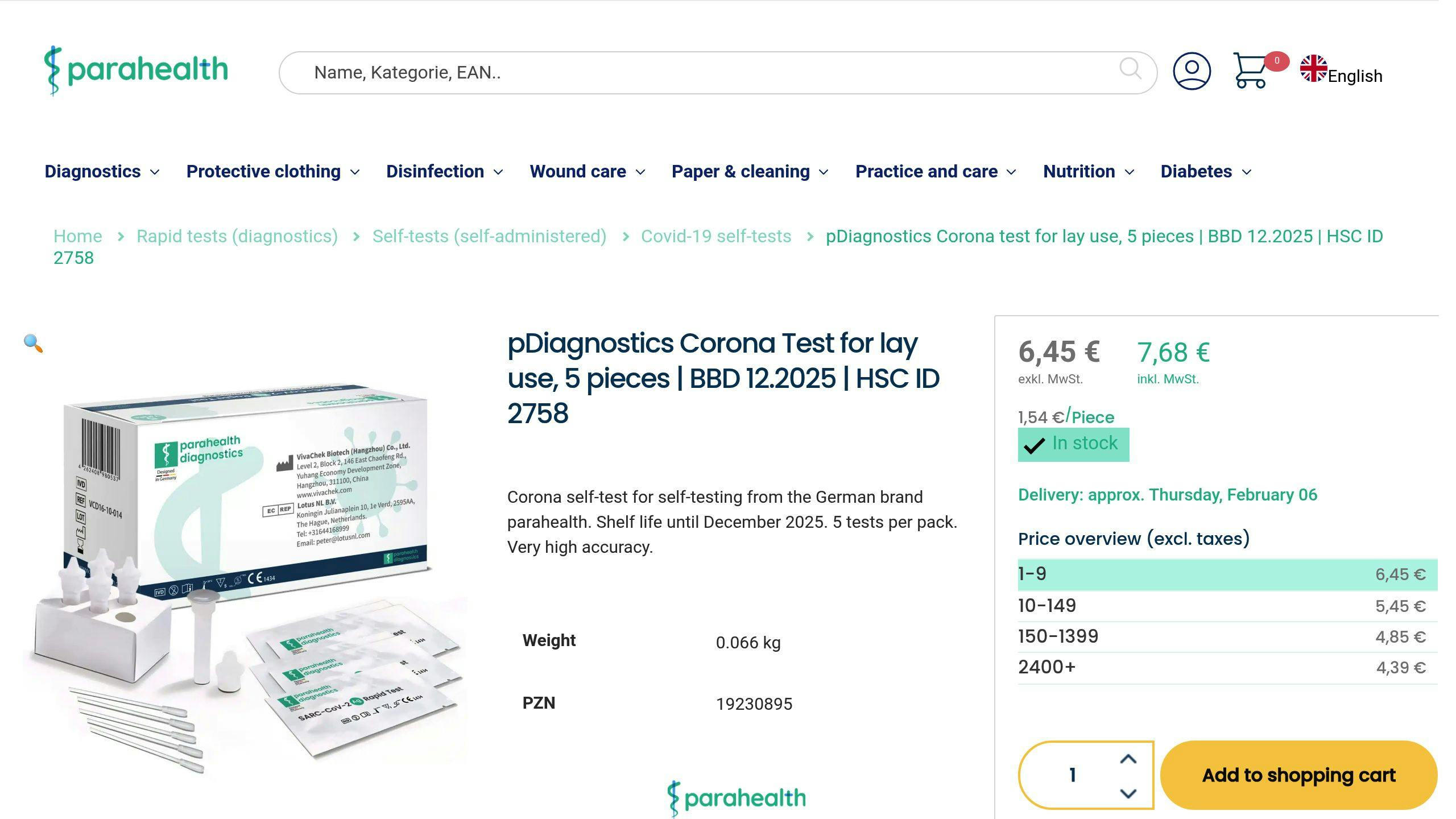
The Parahealth Diagnostics SARS-CoV-2 Antigen Rapid Test delivers fast results and contributes to the early detection of infections. This is a valuable contribution to the global monitoring of resistant variants.
Conclusion: Next Steps
Key Points
The emergence of antiviral resistance in SARS-CoV-2, such as the E166V mutation, which shows 100-fold resistance to Nirmatrelvir, is a serious challenge. Accompanying mutations such as L50F and T21I ensure that these resistant variants remain stable.
Dr. Craig Wilen sums up the urgency:
"Resistant variants have reduced the treatment options to a single oral drug, Paxlovid."
These developments make it clear that urgent measures are needed to prevent further resistance from developing.
Recommendations
| Target Group | Measures |
|---|---|
| Healthcare Professionals | Use of combination therapies |
| At-Risk Patients | Regular rapid tests |
| Research Institutions | Development of new drugs |
For immunocompromised individuals, particularly close monitoring is essential. The parahealth Diagnostics SARS-CoV-2 Antigen Rapid Test can help detect infections early.
New oral agents that target human cells could in future play an important role in combating viral outbreaks. In combination with better global monitoring and closer international cooperation, these approaches could form the basis for dealing with future challenges posed by viral resistance.
FAQs
The challenges posed by antiviral resistance raise many questions about the available treatment options.
Which antiviral medications are used against SARS-CoV-2?
The range of treatment options is limited by resistant variants, which makes the search for new solutions particularly important. There are currently three key medications:
| Medication | Administration | Notes on resistance |
|---|---|---|
| Remdesivir | Intravenously | Resistance possible through RdRp mutations |
| Molnupiravir | Oral | Resistance development through RNA mutations is rare |
| Nirmatrelvir/Ritonavir | Oral | Mpro mutations can affect efficacy |
Interestingly, mutations that cause resistance to these medications have been detected only very rarely in genome analyses to date.
For people with an elevated risk or a weakened immune system, regular monitoring is particularly important. The parahealth Diagnostics SARS-CoV-2 antigen rapid test can help detect infections early and track down resistant variants.
This information shows how important ongoing monitoring and the development of new therapies are.
Related Blog Posts
- How to Perform a Corona Self-Test Correctly: Guide 2025
- Flu Wave 2025: Rising Case Numbers & Current Situation
- Wound Care: The 10 Most Common Questions Answered
- Gloves in Care 2025: Latex, Vinyl or Nitrile Gloves
Related Collections
Recommended Products
- HighTop RSV & Influenza A/B + Corona Combination Rapid Test 4in1 20 Pieces, Expiry Date 12/27
- fluorecare Corona & Influenza A/B & RSV Antigen Combination Test, Expiry Date 04/2027
